Showing posts with label nutrition. Show all posts

Saturday, August 18, 2012

If your'e a chicken, don't smoke


Smoked fish.
If you were annoyed to learn recently that eggs are once again bad for you, relax.

A study looked at patients with an average age of 62, some of whom really loved eggs and some of whom really loved cigarettes. Researcher David Spence then measured the amount of plaque in their arteries.
The results? Both smoking and eating eggs were independently associated with plaque increases, and eggs were almost as bad as cigarettes. “The effect size of egg yolks appears to be approximately 2/3 that of smoking,” Spence wrote. “Probably egg yolks should be avoided by persons at risk of vascular disease.” 
The problem is that the conclusion is based on self-reported lifetime history of smoking and egg-eating  -- and only smoking and egg-eating.
While it’s entirely possible that people who ate a bunch of eggs filled the rest of their diets with kale and dust and steel-cut oats, it’s just as possible they were eating those eggs alongside bacon and sausage and Hollandaise sauce. In other words: Maybe eggs aren’t solely to blame here.
In fact, we have no way of telling, based on this study, what role eggs specifically played in the development of these arterial plaques.
Antonis Zampelos, a nutrition professor, told Canada’s CBC News that these results lack validity. “The results are not as strong as the statement that came out … I’m not saying that this is not an interesting study. I’m saying that you can’t really make such a strong statement about smoking.”

“This is very poor quality research that should not influence patient’s dietary choices,” Steven Nissen, chair of the department of Cardiovascular Medicine at the Cleveland Clinic Foundation, told ABC News. “It is extremely important to understand the differences between ‘association’ and ‘causation’.”

Friday, May 18, 2012

I told you there is a God


After years of waffling research on coffee and health, even some fear that java might raise the risk of heart disease, a big study finds the opposite: Coffee drinkers are a little more likely to live longer. Regular or decaf doesn’t matter.
The study of 400,000 people is the largest ever done on the issue, and the results should reassure any coffee lovers who think it’s a guilty pleasure that may do harm.
“Our study suggests that’s really not the case,” said lead researcher Neal Freedman of the National Cancer Institute. “There may actually be a modest benefit of coffee drinking.”
No one knows why. Uh, do you really care?
 Coffee contains a thousand things that can affect health, from helpful antioxidants to tiny amounts of substances linked to cancer. The most widely studied ingredient — caffeine — didn’t play a role in the new study’s results.
It’s not that earlier studies were wrong. 
There is evidence that coffee can raise LDL, or bad cholesterol, and blood pressure at least short-term, and those in turn can raise the risk of heart disease. 
Even in the new study, it first seemed that coffee drinkers were more likely to die at any given time. But they also tended to smoke, drink more alcohol, eat more red meat and exercise less than non-coffee-drinkers. 
Once researchers took those things into account, a clear pattern emerged: Each cup of coffee per day nudged up the chances of living longer.
Next week: why smoking, drinking, red meat and no exercise are good for you.

Tuesday, May 15, 2012

Now it's the "portolio" diet

A study has found that a vegetarian diet emphasizing a “portfolio” of cholesterol-lowering foods did a better job of reducing low-density lipoprotein — the so-called “bad” cholesterol — than a low-saturated-fat vegetarian diet. 
All participants in the study followed a heart-healthy diet rich in fruits, vegetables, and whole grains. Those in the portfolio group were told to emphasize four specific types of cholesterol-lowering foods in their diets — soluble fiber, nuts, soy protein, and margarines enriched with plant sterols — while those in the low-saturated fat group were told to avoid these foods.
For someone eating 2,000 calories per day, a portfolio diet would aim to provide the following amounts of these cholesterol-lowering foods:
  • Soluble fiber: 18 grams per day of fiber from foods such as oatmeal, oat bran, barley, peas, beans, lentils, psyllium, and vegetables such as okra and eggplant
  • Nuts: one ounce, or about one handful, per day
  • Soy protein: 42.8 grams per day from soy-based foods such as soy milk, tofu, and soy meat substitutes (four ounces of tofu contains 9.4 grams of soy protein; eight ounces of regular soy milk contains six grams of soy protein)
  • Plant-sterol-enriched margarine: 1.8 grams per day (1 to 2 tablespoons, depending on the product)
Here is a representative diet followed by participants in the portfolio group:
Breakfast: Hot oat bran cereal, soy beverage, strawberries, sugar, psyllium, oat bran bread, plant-sterol-enriched margarine, jam
Snack: Almonds, soy beverage, fresh fruit
Lunch: Black bean soup, sandwich made from soy deli slices, oat bran bread, plant-sterol-enriched margarine, lettuce, tomato, and cucumber
Snack: Almonds, psyllium, fresh fruit
Dinner: Tofu (baked with eggplant, onions, and sweet peppers), pearled barley, vegetables (broccoli, cauliflower, etc.)
Snack: Fresh fruit, psyllium, soy beverage
Researchers at the University of Toronto enrolled 351 women and men with hyperlipidemia (high levels of fats in the blood), including an LDL level that averaged 171 milligrams per deciliter, or mg/dL. (Optimal LDL is less than 100 mg/dL). 
All were instructed to follow weight-maintaining, largely vegetarian diets. Some were assigned to incorporate a “portfolio” of cholesterol-lowering foods into their diet. These foods included soluble fibers such as oatmeal, barley, psyllium-enriched cereals, okra, and eggplant; nuts; soy protein (soy milk, tofu, and soy meat substitutes); and margarines enriched with plant sterols. The control group was advised to focus on eating low-fat dairy, whole grains, fruits, and vegetables and to avoid the portfolio foods.
After six months, LDL levels dropped an average of 13% to 14% in the portfolio group, compared with 3% — a nonsignificant drop, meaning it could have been due to chance — in the group eating the low-saturated-fat diet. The portfolio group also had an 11% reduction in their calculated 10-year risk of having a heart attack (based on the Framingham Heart Study risk assessment tool). On the other hand, the control group had a nonsignificant 0.5% drop in calculated risk. 
Results showed that a diet high in cholesterol-lowering foods can lower LDL levels even in people who are already following a heart-healthy diet. But this brief study doesn’t tell us whether this results in fewer heart attacks or other cardiovascular events down the road. Also, the study did not determine the LDL-lowering impact of the individual portfolio foods, though the combination may be important, because each lowers cholesterol in different ways. Nonetheless, the findings offer evidence of the value of adding cholesterol-lowering foods to your diet.
I just bought two bags of pine bark mulch for the garden, but I think I'll sprinkle some sugar and milk on it and eat it instead. 

Saturday, April 14, 2012

That apple a day thing

Bite me.
Eating an apple a day brings extraordinary health benefits, Kathy Freston writes.
A major review published in 2008 out of the German Cancer Research Center found that indeed, compared with those who eat less than an apple a day, those who eat one or more had less risk of oral cancer, cancer of the voice box, breast cancer, and colon, kidney, and ovarian cancer as well. 
This makes sense given new research from Cornell showing that apple peels have potent antioxidant and growth-blocking effects on human breast cancer cells examined in a petri dish, and the higher the apple concentration, the fewer the cancer cells. And apples seem to work best against estrogen-receptor-negative breast cancer, which is much harder to treat than the receptor-positive kind.
How do apples do what they do?
There are three stages of tumor formation. Carcinogens cause the initial DNA mutations (the initiation stage), and then oxidation, inflammation, and hormones cause it to grow (the promotion stage); finally, metastasis occurs, in which the cancer spreads throughout the body. Which steps have apples been found to block? All of them. Apples not only have antimutagenic, antioxidant, and anti-inflammatory effects, but they may even enhance our immune systems to help clear out any budding tumors before they get their start.
Apples will also help you lose weight, she says. Continuing eating as you do now, but eat an apple first. The special fiber in apples will make you feel full longer, and you'll eat less of everything else.

Saturday, April 7, 2012

Maybe this is why Eve

Eat this, live forever.
gave Adam the apple.

Men who eat flavonoid-rich foods such as berries, tea, apples and red wine significantly reduce their risk of developing Parkinson's disease, according to new research by Harvard University and the University of East Anglia (UEA).
Around 130,000 men and women took part in the research. More than 800 had developed Parkinson's disease within 20 years of follow-up. After a detailed analysis of their diets and adjusting for age and lifestyle, male participants who ate the most flavonoids were shown to be 40 per cent less likely to develop the disease than those who ate the least. No similar link was found for total flavonoid intake in women.
This is the first study in humans to look at the associations between the range of flavonoids in the diet and the risk of developing Parkinson's disease and our findings suggest that a sub-class of flavonoids called anthocyanins may have neuroprotective effects. 
Prof. XiangGao said: "Interestingly, anthocyanins and berry fruits, which are rich in anthocyanins, seem to be associated with a lower risk of Parkinson's disease in pooled analyses. Participants who consumed one or more portions of berry fruits each week were around 25 per cent less likely to develop Parkinson's disease, relative to those who did not eat berry fruits. Given the other potential health effects of berry fruits, such as lowering risk of hypertension as reported in our previous studies, it is good to regularly add these fruits to your diet." 
Flavonoids are a group of naturally occurring, bioactive compunds found in many plant-based foods and drinks. In this study the main protective effect was from higher intake of anthocyanins, which are present in berries and other fruits and vegetables including aubergines, blackcurrants and blackberries. Those who consumed the most anthocyanins had a 24 per cent reduction in risk of developing Parkinson's disease and strawberries and blueberries were the top two sources in the US diet.
Basically, men have to start eating like women.

Thursday, February 2, 2012

Eat your broccoli, boys and girls

And don't cook it too much.
Broccoli has been of particular interest to scientists because it contains the highest levels of certain glucosinolates, a class of phytochemicals that many believe may reduce the risk of prostate, breast, lung and colorectal cancer. 
When eaten as a raw or lightly-cooked food, enzymes in the broccoli help to break down the glucosinolates into two valuable compounds of intensive research interest -- sulforaphane and erucin. However,
A necessary enzyme called myrosinase is missing from most of the supplement forms of glucosinolates, a valuable phytochemical in cruciferous vegetables. Without this enzyme found in the whole food, the study found that the body actually absorbs five times less of one important compound and eight times less of another. 
Intensive cooking does pretty much the same thing. If broccoli is cooked until it's soft and mushy, its health value plummets. However, it can still be lightly cooked for two or three minutes, or steamed until it's still a little crunchy, and retain adequate levels of the necessary enzyme.
Eat your enzymes, boys and girls. 

Wednesday, September 7, 2011

Have a bowl of cereal for dinner

Dinner's ready!
Bill Phillips, the editor of MensHealth.com, likes a bowl of cereal with bananas for dinner. It wouldn't be bad for the rest of us either. Here's why.

Eat a bowl of 100 percent B12-boosted cereal and milk every morning and you'll be covered for B12, he writes, and that vitamin is essential if you don't want to lose brain matter as you age. Acid-blocking drugs may be depriving you of as much B12 as you need.

The banana offers potassium -- without this essential mineral, your heart couldn't beat, your muscles wouldn't contract, and your brain couldn't comprehend this sentence. Why? Potassium helps your cells use glucose for energy. A banana offers 400 mg of the 4,700 mgs a young man needs each day.

The milk offers iodine, and you probably don't get what you need from salt. However, iodine can also be found in a nearly sodium-free source: milk. Animal feed is fortified with the element, meaning it travels from cows to your cereal bowl. Not a milk lover? Eat at least one serving of eggs or yogurt a day; both are good sources of iodine.

Friday, April 8, 2011

I say, let them eat broccoli

Will do well in corporate meetings.

If you’re not a big fan of bitter food, chemists have just the loophole for you. You still have to take the bitter, but you won’t have to taste it. Scientists have concocted a new and improved “bitter blocker.” 
We likely find bitter bad because many toxic substances are bitter. So an aversion to bitter may have helped our ancestors survive.
Right you are, Sparky -- that's why no one should ever eat beets. Ever. If you do, you will die.
Problem is, plenty of healthful foods are bitter, too. Take broccoli and kale. (Please.) The standard solution, drowning out the bitter with butter, sort of cancels out the veggies’ health food status.

Rather than getting rid of the bitter, chemists came up with a compound that simply blocks our receptors for the bitter molecules, and our ability to taste them. So you may not need that spoonful of sugar to make the medicine go down. Or the broccoli.
However, we all know it's true: spare the spinach, spoil the child. God invented vegetables to give parents a means of disciplining children so that they will be prepared to go forth into the world and join the accounts receivable department at a global conglomerate and be miserable the rest of their awful lives.

Besides, how much bitter can a bitter blocker block if a bitter blocker blocks broccoli? You see what I mean.

I told you there is a god

Eat this, live forever.

Here's some good news: Strawberries have the potential to prevent esophageal cancer, according to a preliminary study.
Freeze-dried strawberries slowed the growth of dysplastic, or precancerous, lesions in about 30 people who consumed the fruit for six months. The freeze-dried substance is about 10 times as concentrated as fresh strawberries, but the study's lead researcher, Tong Chen, an assistant professor in the oncology division of Ohio State University, suggested people could still benefit from eating whole strawberries daily.
Stay with me. Other researchers claim that eating a bar of dark chocolate once a week can lower the risks of cancer, but what is more important: dark chocolate can be used even to inhibit the growth of cancerous cells.

Told you.

Saturday, March 26, 2011

Eat your fiber, boys and girls

Eat rope, live forever.

Dietary fiber may be associated with a reduced risk of death from cardiovascular, infectious and respiratory diseases, as well as a reduced risk of death from any cause, a new study says.

In the study involving 219,123 men and 168,999 women, fiber intake was associated with a significantly decreased risk of total death in both men and women -- the one-fifth of men and women consuming the most fiber (29.4 grams per day for men and 25.8 grams for women) were 22 percent less likely to die than those consuming the least (12.6 grams per day for men and 10.8 grams for women).

The risk of cardiovascular, infectious and respiratory diseases was reduced by 24 percent to 56 percent in men and 34 percent to 59 percent in women with high fiber intakes. Dietary fiber from grains, but not from other sources such as fruits, was associated with reduced risks of total, cardiovascular, cancer and respiratory disease deaths in men and women.

You can see a list of foods with lots of fiber here. Potato skins are included.

Saturday, February 19, 2011

Exciting new ways to eat

Don't wanna get on her bad side.
The departments of Agriculture and of Health and Human Services have issued new Dietary Guidelines for Americans. Health writer Jane Brody sums them up:

  • Eat lots more vegetables and fruits, filling half your plate with them.
  • Choose lean meats and poultry, and replace some of them with seafood.
  • Consume mainly nonfat or low-fat milk and other dairy products.
  • Choose low-sodium products and use less salt and salty ingredients in food preparation.
  • Eat more fiber-rich foods; replace most refined grains and grain-based foods with whole-grain versions.
  • Use vegetable oils like olive and canola oil instead of solid fats like butter and margarine, but remember that all fats have lots of calories.
  • Eat out less; cook at home more often.
  • Drink water, calorie-free beverages like coffee and tea, and 100 percent fruit juice instead of regular sodas, fruit drinks and energy drinks; limit alcoholic drinks to one a day for women, two for men.
  • Eat less and exercise more to achieve a better balance of caloric intake and output. 
She also offers some practical advice for getting there.

Monday, January 24, 2011

Eat your berries, dude

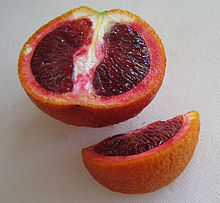
Anthocyanins contribute pigmentation to blood oranges.
One in three Americans is said to have high blood pressure, or hypertension. A new study by British and Harvard scientists has found that bioactive compounds in blueberries called anthocyanins offer protection against hypertension. 

Compared with those who do not eat blueberries, those eating at least one serving a week reduce their risk of developing the condition by 10 per cent.

The researchers looked at the diets of 150,000 people.
Dietary information identified tea as the main contributor of flavonoids, with apples, orange juice, blueberries, red wine, and strawberries also providing important amounts. When the researchers looked at the relation between individual subclasses of flavonoids and hypertension, they found that participants consuming the highest amounts of anthocyanins (found mainly in blueberries and strawberries in this US-based population) were eight per cent less likely to be diagnosed with hypertension than those consuming the lowest amounts. The effect was even stronger in participants under 60.
The effect was strongest for blueberry rather than strawberry consumption. I guess the strawberry lobby will be up in arms over this.

More at Wikipedia on the health properties of blueberries and anthocyanins.

Wednesday, January 12, 2011

Got almond milk?

I put almond milk on cereal, because I read somewhere that almonds are good for something. And we keep a big supply of them on hand for munching.

Apparently other people like almond milk as well, even though it costs more than regular milk. The Wall Street Journal reports that it's flying off the shelves.

So is this stuff good for you? Apparently so. Wikipedia has this:
The sweet almond contains about 26% carbohydrates (12% dietary fiber, 6.3% sugars, 0.7% starch and the rest miscellaneous carbohydrates), and may therefore be made into flour for cakes and cookies (biscuits) for low-carbohydrate diets or for patients suffering from diabetes mellitus or any other form of glycosuria.

Almond flour is gluten-free and therefore a popular ingredient in place of wheat flour for gluten-sensitive people and people with wheat allergies and coeliac disease. A standard serving of almond flour, 1 cup, contains 20 grams of carbohydrates, of which 10 g is dietary fibre, for a net of 10 g of carbohydrate per cup. This makes almond flour very desirable for use in cake and bread recipes by people on carbohydrate-restricted diets.

Almonds are a rich source of vitamin E, containing 24 mg per 100 g. They are also rich in monounsaturated fat, one of the two "good" fats responsible for lowering LDL cholesterol. A controlled trial showed that 73g of almonds in the daily diet reduced LDL cholesterol by as much as 9.4%, reduced the LDL:HDL ratio by 12.0%, and increased HDL-cholesterol (i.e., the good cholesterol) by 4.6%.
How much is 73 grams? The average weight of an almond is 1.2 grams so in 40 grams there would be 33.33 almonds.

Thursday, December 30, 2010

Lose friends, save your joints

It seems that garlic, and other allium vegetables, such as onions and leeks, have the effect of preventing hip osteoarthritis. Scientists discovered this in a careful study of 1,000 twins in Britain.

They found that in those who consumed a healthy diet with a high intake of fruit and vegetables, particularly alliums such as garlic, there was less evidence of early osteoarthritis in the hip joint. They found that that a compound called diallyl disulphide limits the amount of cartilage-damaging enzymes when introduced to a human cartilage cell-line in the laboratory.

"While we don't yet know if eating garlic will lead to high levels of this component in the joint, these findings may point the way towards future treatments and prevention of hip osteoarthritis," said Dr. Frances Williams, lead author from the Department of Twin Research at King's College London.

Probably a good signal to buy stock in companies selling breath mints.

Friday, November 26, 2010

The good stuff in your Thanksgiving meal

We've all heard of beta carotene, but it turns out there's something else lurking in vegetables that may be better for you: alpha carotene.

People who consume high levels of alpha-carotene -- which is found in several vegetables -- may live longer, researchers have found.
Although there has been much research into the relationship between beta-carotene and risk of disease, less attention has been paid to the role of alpha-carotene, which is found in high concentrations in yellow-orange vegetables such as carrots, sweet potatoes, and pumpkins and dark-green vegetables such as broccoli, spinach, and leaf lettuce. 
The two compounds are chemically similar, but studies have found that alpha-carotene is better at inhibiting the proliferation of human neuroblastoma cells, the tumor-promoting action of glycerol in lung carcinogenesis, and skin tumor promotion. It has also been found to be a potent inhibitor of liver carcinogenesis.
Consumption of high levels of alpha carotene appears to reduce the risk of dying of all causes by up to 39%.

Grandma has plans for Grandpa
Oh, and to spice things up after the game, don't forget the pumpkin pie.
According to a new study, besides satisfying their sweet tooth, the smell of pumpkin pie really turns men on. "The number one odor that enhanced penile blood flow was a combination of lavender and pumpkin pie," Alan Hirsch, Director of Chicago's Smell and Taste Treatment Research Center, says.

But it goes beyond the pumpkin scent. The seeds themselves are great for men's sexual health and are even recommended if guys have issues with their little friend.
No wonder Thanksgiving became a national holiday. Then again, vanilla and strawberry were two other scents that received high responses in Hirsch's test, but, he says, "Every odor we tested aroused the participants."

Let's see. Soak the strawberries in vanilla and apply liberally to the top of a pumpkin pie ...

Sunday, October 24, 2010

Another reason to eat whole grains

People who consume several servings of whole grains per day while limiting daily intake of refined grains appear to have less of a type of fat tissue thought to play a key role in triggering cardiovascular disease and type 2 diabetes, a new study suggests.

This was true even after accounting for other lifestyle factors such as smoking, alcohol intake, fruit and vegetable intake, percentage of calories from fat and physical activity.

The Tufts University researchers observed that participants who consumed, on average, three daily servings of whole grains but continued to eat many refined grains did not demonstrate improvement. 

“Whole grain consumption did not appear to help if refined grain intake exceeded four or more servings per day,” said one author of the study.  “This result implies that it is important to make substitutions in the diet, rather than simply adding whole grain foods. For example, choosing to cook with brown rice instead of white or making a sandwich with whole grain bread instead of white bread.”

Tuesday, October 19, 2010

A plant compound reduces memory problems

A diet rich in the plant compound luteolin  -- found in many plants, including carrots, peppers, celery, olive oil, peppermint, rosemary and chamomile -- reduces age-related inflammation in the brain and related memory deficits, researchers report.
The researchers focused on microglial cells, specialized immune cells that reside in the brain and spinal cord. Infections stimulate microglia to produce signaling molecules, called cytokines, which spur a cascade of chemical changes in the brain. Some of these signaling molecules, the inflammatory cytokines, induce "sickness behavior": the sleepiness, loss of appetite, memory deficits and depressive behaviors that often accompany illness.
Inflammation in the brain also appears to be a key contributor to age-related memory problems, said University of Illinois animal sciences professor Rodney Johnson, who led the new study. Johnson directs the Division of Nutritional Sciences at Illinois.
"These data suggest that consuming a healthy diet has the potential to reduce age-associated inflammation in the brain, which can result in better cognitive health," Johnson said.

Sunday, October 17, 2010

Eating to prevent diabetes

The Mediterranean diet -- high in vegetables, fibre-rich grains, legumes, fish and plant-based sources of unsaturated fat -- particularly olive oil and nuts -- while being low in red meat and high-fat dairy -- may help prevent diabetes.

Spanish researchers studying more than 400 adults found that those following the traditional diet were less likely to develop diabetes over four years -- even without counting calories or shedding weight.
The participants were randomly assigned to one of three diets: a Mediterranean diet with emphasis on more consumption of olive oil, the same diet with a focus on getting unsaturated fats from nuts, and a diet cutting all types of fat. After four years, 10 to 11 percent of those in the two Mediterranean groups had developed diabetes, compared to 18 percent of those in the low-fat diet group.
But don't rule out exercise and calories: when the researchers accounted for a number of other factors, such as the participants' weight, smoking history and reported exercise levels, the Mediterranean diet itself was linked to 52 percent reduction in diabetes risk compared to the low-fat diet.

Tuesday, October 12, 2010

A second look at antioxidants

One of the current fads in nutrition today is antioxidants -- vitamins like C and E that go after free radicals, molecules created by the breakdown of oxygen during metabolism.

"Each of us constantly creates free radicals simply by living and breathing, Tara Parker-Hope writes in The New York Times. "But these molecules are highly reactive and capricious, sometimes attacking other cells and damaging tissue. Wilding free radicals have been linked with a number of diseases and with aging."

Exercise, she writes, creates even more free radicals, and so athletes were encouraged to to lots of antioxidants. A few years ago, however, some researchers started fooling around with rats. One group got lots of antioxidants before exercise, the other got none. The antioxidant bunch showed no free radicals in their blood.
The leg muscles of the other exercised rats, though, teemed with free radicals. But at the same time, they buzzed with other, unexpected biochemical reactions. In their legs, genes were being expressed that activated growth factors that, in turn, increased levels of ‘‘important enzymes associated with cell defense’’ and ‘‘adaptation to exercise,’’ the researchers wrote. There was hardly any similar activity in the rats with low free-radical levels. Somehow, the researchers speculated, the free radicals had jump-started a process that over time would allow the rats’ muscles to adapt to exercise. Suppressing the production of free radicals had, they concluded, prevented the ‘‘activation of important signaling pathways’’ and altered the muscles’ ability to adapt to exercise. As a result, they wrote, ‘‘the practice of taking antioxidants’’ to ward off the presumed free-radical damage caused by exercise ‘‘may have to be re-evaluated.’’
Then another study last year, this time with humans.
A group of young men were enrolled in a month-long exercise program. Some swallowed moderately high doses of the antioxidant vitamins C and E. Others did not. At the end of the month, the men not taking the vitamins showed higher-than-average activity in their bodies’ innate antioxidant defense system. The men downing the vitamins did not, which makes sense; the antioxidant vitamins were mopping up the free radicals for them. But at the same time, the men not taking vitamins significantly increased their insulin sensitivity, a key measure of the health benefits of exercise, while those taking the antioxidants did not. Apparently, when the body’s natural antioxidant defense system went into high gear, so did its ability to handle insulin. Removing the necessity for the body to deal, on its own, with the free radicals also prevented other adaptations that make exercise healthy.
What does all of this mean?
‘‘The evidence suggests that antioxidants are not needed’’ by most athletes, even those training strenuously, said Li Li Ji, a professor of exercise physiology and nutritional science at the University of Wisconsin and one of the authors of the rat study. ‘‘The body adapts,’’ he said, a process that can, it seems, be altered by antioxidant supplements.


Another lesson: ‘‘Eat well,’’ he said. Although this is not yet proved, it seems likely, he continued, that antioxidants from foods, like blueberries, green tea and carrots, may work in tandem with the body’s natural antioxidant defenses better than those from supplements.

But the overriding lesson of the newest science about exercise and antioxidants may be as simple as: let the body be. ‘‘It is quite a smart machine,’’ Dr. Ji said. ‘‘It knows how to respond’’ to stresses like a hard run, without the need for antioxidant pills.
It's not clear how this affects people not consider "athletes," and that will be something to discover. But, in the Duh Department, it seems that if exercise is good for us, and we know it is, the body is wise in its own ways.

Friday, October 8, 2010

Get in touch with your inner squirrel

I try to eat some walnuts everyday, typically throwing a few into some cold cereal. Smart guy, I am: a new study found that regularly eating a handful of walnuts can affect the blood pressure response to stress.

The people tested were given one of three diets: no walnuts, 1.3 ounces of walnuts (about 18 walnut halves) and a tablespoon of walnut oil substituted for some of the fat and protein in the average American diet, and walnuts, walnut oil, and 1.5 tablespoons of flaxseed oil.

The subjects were put under stress -- giving a speech -- and tested. The result: Including walnuts and walnut oil in the diet lowered both resting blood pressure and blood pressure responses to stress by two to three points.

The best result came with adding flaxseed oil.
Some of the participants also underwent a vascular ultrasound examination to measure artery dilation.  The results showed that adding flaxseed oil to the walnut diet significantly improved this test of vascular health.  The researchers have previously shown that adding flax to walnuts also lowered C-reactive protein levels, indicating an anti-inflammatory effect that could reduce the risk of cardiovascular disease.
Primary funding for the study came from a walnut trade group, but the beauty of this is that eating some walnuts everyday -- in place of some other source of fat, can't harm you. Otherwise, there would be dead squirrels everywhere.