Showing posts with label obamacare. Show all posts

Saturday, November 24, 2012

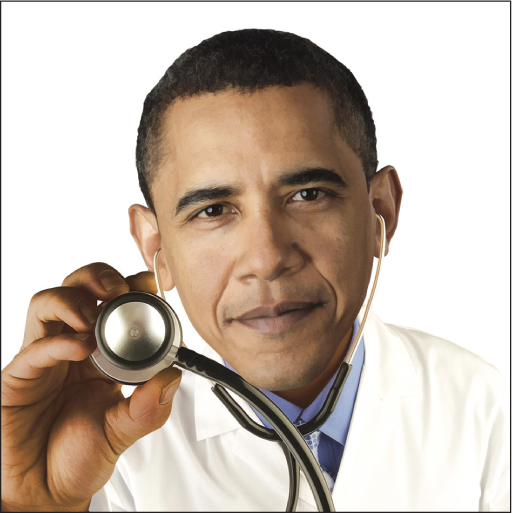
This won't hurt a bit


Barack has showed us that it's okay to bad mouth your opponents. It's the Chicago way, the way Saul Alinsky taught all radicals, and the way Harry Reid conducts himself in the Senate.

So in that spirit, I hope all of you who voted for Hussein enjoy the coming chaos in our medical care. What you've done will make my life a lot harder. Thank you!

Michael Tanner, a senior fellow at the Cato Institute, writes:
Under ObamaCare, employers with 50 or more full-time workers must provide health insurance for all their workers, paying at least 65% of the cost of a family policy or 85% of the cost of an individual plan. Moreover, the insurance must meet the federal government’s requirements in terms of what benefits are included, meaning that many businesses that offer insurance to their workers today will have to change to new, more expensive plans, 
ObamaCare’s rules make expansion expensive, particularly for the 500,000 US businesses that have fewer than 100 employees. 
Suppose that a firm with 49 employees does not provide health benefits. Hiring one more worker will trigger the mandate. The company would now have to provide insurance coverage to all 50 workers or pay a tax penalty. 
In New York, the average employer contribution for employer-provided insurance plans, runs from $4,567 for an individual to $ 12,748 for a family. Many companies will likely choose to pay the penalty instead, which is still expensive — $2,000 per worker multiplied by the entire workforce, after subtracting the statutory exemption for the first 30 workers. For a 50-person company, then, the tax would be $40,000, or $2,000 times 20. 
That might not seem like a lot, but for many small businesses that could be the difference between survival and failure. 
Under the circumstances, how likely is the company to hire that 50th worker? Or, if a company already has 50 workers, isn’t the company likely to lay off one employee? Or cut hours and make some employees part time, thus getting under the 50 employee cap? Indeed, a study by Mercer found that 18% of companies were likely to do exactly that. It’s worth noting that in France, another country where numerous government regulations kick in at 50 workers, there are 1,500 companies with 48 employees and 1,600 with 49 employees, but just 660 with 50 and only 500 with 51.
Blogger Rick Moran adds to the joy:
Individuals and families who will be forced to buy their own insurance when companies drop their health insurance plans will be in for a shock. Even with subsidies, some families will end up paying nearly 10% of their gross income for health insurance. 
The bottom line is mass confusion. Put simply, the American people are unprepared for such a massive change in their lives. Most people don’t realize that their current insurance coverage is inadequate. They actually believed the president when he looked into the cameras during his 2010 State of the Union address and assured citizens that they could keep the insurance plan they have now. Instead, government-mandated coverage for a wide variety of services that many current insurance plans don’t cover will radically alter health insurance for millions.
Good luck!

Monday, August 27, 2012

What we're learning about Obamacare


“We have to pass the bill so that you can find out what is in it.”
-- Nancy Pelosi

What we're finding out:

"Why don't you just bend over."
Take a rain check: Get ready for healthcare gridlock. Once the new healthcare law fully takes effect, all Americans will be entitled to a long list of preventive services with no out-of-pocket costs, but the healthcare system won’t have enough doctors to provide them. The shortage will create longer waiting periods that some patients will be able to cope with better than others. Lower income patients will be worse off, according to the Independent Institute.

Someone always gets rich. It turns out that Obamacare is going to be a very lucrative gig for a new crop of government bureaucrats. A subcommittee of the board charged with establishing a healthcare exchange is considering creating 24 positions and pay those employees a total of more than $3 million annually. The average annual salary of a health benefits exchange employee would exceed $125,000 under the plan. The highest salaries would be paid to the CEO ($200,400) and chiefs of finance, operations and communications would make $165,000 each.

Bad hospital, bad: A provision of ObamaCare is set to punish roughly two-thirds of U.S. hospitals evaluated by Medicare starting this fall over high readmission rates, according to an analysis by Kaiser Health News. Starting in October, Medicare will reduce reimbursements to hospitals with high 30-day readmission rates -- which refers to patients who return within a month -- by as much as 1 percent. The maximum penalty increases to 2 percent the following year and 3 percent in 2014.

This would be your death panel: Peter Orszag, the former White House budget director, derieds  the idea that better incentives can reduce costs. Mr. Orszag's alternative: the Independent Payment Advisory Board composed of 15 philosopher kings who will rule over U.S. health care. Who are these Orszag 15? Well, nobody knows. The board was supposed to be up and running by the end of September, but the White House is avoiding naming names for Senate confirmation until after the election. No one knows, either, what this group of geniuses will propose, but that too is part of the grand Orszag plan.

How it works in Canada: There are two tiers of men with advanced prostate cancer in Ontario: Those who get access to a remarkable drug through private insurance, and those who get a death sentence. The grim news is often delivered at the London Regional Cancer Program to men whose shoulders sag and jaws drop when told Ontario's Health Ministry has for 15 months refused to pay for a medication covered by every other Canadian province.

Alive but dumb: Parents and students facing sky-high state-run college tuitions aren't likely to be thinking about ObamaCare. But perhaps they should, since  ObamaCare will likely end up making college still more expensive. Why? Because ObamaCare relies heavily on Medicaid — the federal/state program that provides health insurance for the poor — to expand coverage. But Medicaid is already swallowing up state budgets, forcing states to cut back on everything else, especially support for public colleges.

Wednesday, August 15, 2012

So maybe you can take care of me


I've been doing some retirement planning this week, and I'm not too far away from signing up for Medicare. I sure hope they have some good-looking nurses.

It is discomforting to absorb the impressions in the media -- President Obama has cut $716 billion from the program; Republican Veep nominee wants to "end Medicare as we know it."

I'm less concerned with how my retirement portfolio is doing than where I'll get healthcare. (Note to financial advisor: ignore this.)

So which is which? You should care, too, because you don't want me knocking on your door in a few years and asking for help with a catheter.

(That is just disgusting. I can't believe you said that.)

It looks as though it's correct that Obama is cutting funds to Medicare to fund Obamacare. The Washington Post, which no one will accuse of having a Republican bias, confirms it. The article's headline: "Romney’s right: Obamacare cuts Medicare by $716 billion. Here’s how."

And it shows where the cuts will come from in this chart.

That's not encouraging. Moreover, a bureaucratic panel of 15 men and women will enforce a spending cap by decreeing how medicine should be practiced and how doctors and hospitals are organized. Did anybody say "Death Panel?" How about "Catheter Committee?"

So what do Romney and Ryan have in mind? I use as sources FactCheck.org and the Kaiser Family Foundation for this:
  • For seniors who are now in Medicare, nothing changes. They can stay with the traditional program as it is.
  • Beginning in 2023, 65-year-olds would have their choice of insurance plans — private and traditional — on a new Medicare exchange. A premium-support payment, like a subsidy, would be sent to the plan of their choice.
  • If the chosen plan costs more than the premium-support, the senior would pay the difference.
  • The Medicare eligibility age would be slowly raised to 67 by 2034.
  • All plans on the Medicare exchange would offer a base level of benefits, and they would be regulated by the Centers for Medicare and Medicaid Services.
  • The premium-support payments would be tied to the second-cheapest plan, which can’t grow more than gross domestic product plus 0.5 percentage points. If the cost does grow faster, Congress would be required to step in and take some action to keep costs down.
I know that if Medicare "as we know it" isn't changed, it's going to collapse on top of my head, pretty nurses and all.

I'll take my chances with Romney and Ryan.

Friday, June 29, 2012

The real answer to our health care woes


Yesterday, as the Supreme Court was declaring that Obamacare is a tax, some researchers in Canada were announcing a step toward a cure for diabetes.
University of British Columbia scientists, in collaboration with an industry partner, have successfully reversed diabetes in mice using stem cells, paving the way for a breakthrough treatment.
After the stem cell transplant, the diabetic mice were weaned off insulin, a procedure designed to mimic human clinical conditions. Three to four months later, the mice were able to maintain healthy blood sugar levels even when being fed large quantities of sugar. Transplanted cells removed from the mice after several months had all the markings of normal insulin-producing pancreatic cells.
According to the American Diabetes Association, 25.8 million children and adults in the United States—8.3% of the population—have diabetes. Another 79 million people have prediabetes. The total cost of diabetes in 2007 was $218 billion.

You won't improve your health care by funneling your taxes through bureaus and agencies in Washington, which will take their share and make decisions on how or if to send it back to your doctor's office.

The current tsunami of medical discoveries will make Obamacare obsolete before it's fully implemented.

Oh, yesterday we also learned that:
  • Johns Hopkins researchers have generated stem cells from skin cells from a person with a severe, early-onset form of Huntington's disease (HD), and turned them into neurons that degenerate just like those affected by the fatal inherited disorder. By creating "HD in a dish," the researchers say they have taken a major step forward in efforts to better understand what disables and kills the cells in people with HD, and to test the effects of potential drug therapies on cells that are otherwise locked deep in the brain.
  • Vertex Pharmaceuticals announced positive final results from a Phase 2 combination study of Kalydeco™ and a potential cystic fibrosis drug called VX-809. Cystic fibrosis patients with two copies of the most common mutation, Delta F508, showed significant improvements in lung function while taking the combination therapy.

I say it's a watermelon


Likes Obamacare.
We live in strange times. The Supreme Court has pronounced Obamacare, under which the federal government will take over your health care and mine, a "tax." We all know it's not a "tax." Even Obamaman himself argued that it wasn't a tax.

So a law passed in late-night, weekend maneuverings on a strictly party-line vote, even as polls showed the American people opposed, and which nobody actually read before voting on it -- as Nancy Pelosi pointed out -- a law that assumes control of one-sixth of the economy, the one-sixth that will determine how long and how well we live, is a "tax."

Fine. A watermelon is a tax. Whatever.

I think we'll learn in six months that John Roberts has a brain tumor affecting his thinking.

The whole notion of federally-run healthcare is DOA. With computers, the Internet and cell phones, central control of anything is a dinosaur.

I saw a program on Bell Labs the other evening. It's where the transistor was invented -- the invention that eventually would make Bell Labs unnecessary. From its peak of 25,000 employees, it's now down to 1,500. Xerox' famous Palo Alto lab went the same way. The reason: companies today can tap into scientific minds anywhere in the world at any time -- without hiring them. They go to websites, post problems, and scientists bid on solving them.

Hierarchical corporations have collapsed -- all the action is on the edge of the network, not in the DOA ranks of middle management once needed to communicate and control.

The media were once centrally controlled. You had to own a printing press to make a newspaper or a TV network or a TV station to broadcast. Youtube anyone?

It's interesting that Obamaman has taken over student loans just as higher education is going through the "change." Middle class kids can't afford college anymore. And yet one university after another is offering courses for free online. The action is in your family room at your computer, not in an ivy-covered building on some far-off campus.

In the same way, forefront of health care is now a smart phone on a doctor's belt that can tell him everything about the patient in front of him, everything in the research about his condition, soon everything about his genetic makeup, and that can image his abdomen and help with a diagnosis.

This can not be helped in any way by bureaucrats and boards and politicians buying and selling votes and power in Washington.

The forces of change are irresistible, and Obamacare will fall under its own weight. It will just be very messy to watch.

Dan Henninger, the Wall Street Journal columnist, wrote before he knew what the decision was:
From day one, the Obama health-care legislation was swimming against the tides of history. It was a legislative monolith out of sync with an iPad world. In the era of the smartphone, ObamaCare was rotary-dial health reform. 
The signs this was so were everywhere, but Barack Obama and the Pelosi-Reid edition of the Democratic Party blew past them. Years before it arrived at the Supreme Court's door, the Obama health-care law was unpopular with the American public. With occasional exceptions, its unfavorables have been above 50% for nearly three years. And why not? It runs counter to the daily experience of virtually everyone.
Electronics, foods, fashion, entertainment, apps, social media, appliances—pretty much anything that escapes the cold hands of a public agency is laid before us in a dazzling, unprecedented array of choices. Despite all the incoming, people learned to navigate the options. Virtually everyone has become adept at customizing a personal milieu that suits them. Given a reasonably growing economy, they'll be able to sustain these choices. 
In this context, the Affordable Care Act gave new meaning to the word "outlier." Starting with the insurance mandate. Of course most people hated it. They're living in a world turning more anti-mandate by the minute, and the Democrats are ordering them all into a national health-insurance pool.
The Affordable Care Act is the exhibit du jour, but there is a disconnect nearly everywhere between governments and the reality of the way life is lived by the people they govern. Across Europe, the young are being drowned by something known as "the welfare state." It sounds more Orwellian than it did the first time. Other than the crude imperatives of survival amid a modernizing people, the Chinese Communist Party is clueless.
If you're counting on Social Security and whatever Medicare will become, you know somewhere deep in your soul that they won't be there. Neither will Obamacare (and now, with Nancy, I guess we'll have to read it to find out what the Supreme Court found in it). The future is elsewhere.

By the way, the name of Henninger's column is "Wonder Land."

Thursday, April 5, 2012

Thursday, February 23, 2012

Is the medical system actually working?


I frequently write about breakthroughs in medicine and suggest that innovation, not government-run healthcare, is the answer.

There now seems to be some evidence that this is true.

New data show that health spending over the past several years has been normalizing toward the rate of general inflation, rather than growing higher and higher, as had been the case almost continuously since the 1970s, J.D. Kleinke writes in The Wall Street Journal.
This moderation in the growth rate of spending predates the national recession. And it puts the lie to the claim that we need government to put the brakes on an "out-of-control" health-care system. The moderation has been driven by cumulative improvements in medical care and by insurers, and by marketplace disciplines on the demand for medical care. Consumers are finally getting more involved in managing and paying for their own care.
Contrary to the perennial doomsaying, the health-care system is—almost in spite of itself—getting better, Kleinke says.
A generation of breakthrough drugs for chronic disease, mental illness, HIV and cancer were developed in the 1980s and '90s at great cost. Dozens of these drugs—like Zocor for heart disease or Zyprexa for schizophrenia—are now widely available, many in generic form. There are now countless electronic ways of telling patients about them. And health insurers are driven by their own evolving market disciplines to make sure patients start taking them and keep taking them in the cheapest available versions. 
Combine all these new medicines, information channels and business compulsions with the slow, steady transfer of economic responsibility for health care—from corporate and government bureaucrats to consumers and their families—and suddenly health-care starts to look almost like an actual market.
Just in time for the whole thing to get swallowed up by Washington.

Monday, December 26, 2011

Throw grandma under the bus


I often write about breakthroughs in medical research. Innovation is the only way out of our healthcare mess: new discoveries in the lab and new ways of getting them to people.

Unfortunately, the new bureaucracies rising up under Obamacare are going to hurt this.

Benjamin Zycher, a senior fellow at the Pacific Research Institute, writes:
Obamacare established the Patient-Centered Outcomes Research Institute to “conduct research to provide information about the best available evidence to help patients and their health care providers make more informed decisions.” What could be wrong with that? CER is supposed to be “a rigorous evaluation of the impact of different options that are available for treating a given medical condition for a particular set of patients.” 
Alas, there is a problem: The federal government does not have patients. Instead, it has interest groups engaged in a long twilight struggle over shares of the federal budget pie. Less for one group means more for others, and even modest reductions in the huge federal health-care budget are a tempting goal for other constituencies.
In other words, there can be no such thing as unpoliticized science in the Beltway, he writes. 
It is inevitable that political pressures will lead policymakers to use the findings yielded by CER analyses to influence decisions on coverage, reimbursement, or incentives within Medicare, Medicaid, and other federal health programs.

Consider the new environment confronting would-be investors in new and improved medical technologies, examples of which are pharmaceuticals and medical devices and equipment. One cannot know in advance either how CER analyses of interest will turn out or how the findings will be used. Indeed, the uncertainties are enormous.
This is staggering:
Recent research from the Pacific Research Institute examined the likely effects of these CER implications for R&D investment in new and improved pharmaceuticals and devices and equipment. Using data from the National Science Foundation and other sources, R&D investment would be reduced by about $10 billion per year over the period 2014 through 2025, or about 10-12 percent. Based upon the scholarly literature on the benefits of medical innovation, this reduction in the advance of medical technology would impose an expected loss of about 5 million life-years annually, with a conservative economic value of $500 billion, an amount substantially greater than the entire U.S. market for pharmaceuticals and devices and equipment.
This adverse effect would be concentrated upon technological advances likely to serve the needs of smaller subgroups within the overall patient population, upon riskier investments among new treatments, and upon drugs and equipment expected to prove relatively less profitable.
Well, if people die the cost of their healthcare drops to zero. So there's a solution.

Sunday, July 31, 2011

Will this happen to your doctor?

A physician in Seattle who calls himself Dr. Bob describes how the profession is changing.
The past year or so has been one of the most challenging in many a season, on a number of fronts. Professionally, the passage of Obamacare has made it abundantly clear that the independent private practitioner is a dying breed, and likely will disappear — with the exception of cash-only, concierge-style arrangements — within the next few years. The administrative burden is crushing — unfunded mandates, such as pay-for-performance, compliance programs, HIPAA, mandated “government certified” EMRs (even though existing, non-certified ones are fully functional), and intrusive, abusive audits by the Feds and third party carriers.  
Such mandates and regulatory excesses place, or will soon place, such an overwhelming burden on the solo physician or small group as to make their continued existence unsustainable, even in the near term — and the full implementation of Obamacare will put roses on their grave. Reimbursements are dropping precipitously (my income dropped about 25% last year), as expenses spiral upward (employee health insurance rates are up 25%; malpractice rates up 15%, etc., etc.). The small business model of solo practice or small medical group is rapidly becoming extinct: its executioner, Big Government and Big Insurance.
And so, big changes are in store: my practice will be sold in the next few months to a large medical group affiliated with a nearby hospital, and I will have as a primary responsibility inpatient hospital care, with a much diminished office practice focusing primarily on my specialty of male infertility and vasectomy reversal. I have decidedly mixed feelings about this change — I anticipated going to my deathbed as a private, solo practitioner, loving the independence and rich patient relationships which this brings. 
But I am weary. After nearly 30 years in private practice, I am not sure which straw broke the camel’s back, but it is most surely broken. It is a weariness born of 14 hour days; of dictating charts and finishing paperwork until 8 or 9 pm each night, after starting the day at 7 am; of endless audits by the insurance industry and Medicare; of the constant threat of litigation; of the crushing burden of one more federal requirement mandated but never recompensed; of a host of ever-expanding administrative burdens having nothing to do with patient care, and everything to do with bureaucratic micromanagement of the profession. And this before we have even begun to see the nightmare which Obamacare will inflict. Camels weren’t designed to carry such a load.
I've started to notice this around here.

Sunday, July 3, 2011

The geniuses who want to manage your health

Here's a look at the bureaucrats who are sticking their fingers ever deeper into your healthcare.
President Barack Obama's health care law would let several million middle-class people get nearly free insurance meant for the poor, a twist government number crunchers say they discovered only after the complex bill was signed.
Remember how they shoved this down the country's throat in weekend and late night sessions? Remember how lawmakers admitted they hadn't read it?
By changing the way it pays, Medicare under the Accountable Care Organization rule is effectively mandating a new business model for practicing medicine. The vague cost-control hope is that ACOs will run pilot programs he successful ones will become best practices. While the program is voluntary for now, the government's intention is to make it mandatory in the coming years. However, the American Medical Group Association, a trade association of multispeciality practice groups and other integrated providers, calls the rule recently drafted by the Department of Health and Human Services "overly prescriptive, operationally burdensome, and the incentives are too difficult to achieve." In a survey of its members, 93% said they won't enroll.
That's what you get when you have a bunch of staff egg heads writing legislation fundamentally changing one-sixth of the economy.
Long after questions were first raised about the overuse of powerful CT scans, hundreds of hospitals across the country needlessly exposed patients to radiation by scanning their chests twice on the same day. Yet some hospitals were doing that more than 80 percent of the time for their Medicare chest patients. “If you do both, you bill for both,” one doctor said.
So existing incentives under government rules cause this, but nobody has bothered changing it.
Medicare fraud --  estimated now to total about $60 billion a year -- has become one of, if not the most profitable, crimes in America.
We've know this for years, as well, but it continues.

Certainly our healthcare system is screwed up, but are Washington bureaucrats the right people to fix it? Dream on.

Monday, January 3, 2011

Here come the changes in your health care

New taxes on drug makers, lower prescription-drug costs for seniors and restrictions on tax-free medical spending accounts are among a slate of health-law provisions that kicked in Saturday, The Wall Street Journal reports.
Medicare recipients who fall into a prescription-drug coverage gap known as the "doughnut hole" may reap the biggest windfall of the law in 2011. Enrollees whose total drug costs for the year fall between $2,840 and $6,448 will get a 50% discount on branded prescriptions. That's compared with a $250 rebate the law gave them in 2010 to offset the cost of paying for those drugs entirely out of pocket. The seniors' group AARP estimates more than three million people fall into the doughnut hole each year.

The cost of drug coverage, however, will go up for some seniors. Medicare beneficiaries with annual incomes above $85,000 for individuals and $170,000 for couples will get a smaller government subsidy for Medicare Part D prescription-drug coverage.

Also under the law, about 20 preventive health services, including colorectal cancer screenings, mammograms and smoking cessation services, will be free for people on Medicare.

Consumers will no longer be able to use their flexible spending accounts—tax-free funds set aside for medical costs—to pay for most over-the-counter items unless they are purchased with a prescription.
Stay tuned.

Sunday, December 12, 2010

Doctors respond to Obamacare

For all the times that President Obama promised "you'll get to keep your doctor" under his health-care reforms, he apparently failed to ask any practicing doctors.

A recent survey finds that countless MDs will respond to ObamaCare by limiting which patients they'll see.
The Physicians Foundation asked 2,400 doctors and American Medical Association members what they thought of the new law; a full 67 percent were against it.

More important, it asked how they'd cope with the new rules (which don't fully kick in until 2014). Sixty percent said they feel compelled to "close or significantly restrict their practices to certain categories of patients." And 59 percent said the "reform" would oblige them to spend less time with the patients they do have.

Of course, many doctors already limit how many patients they'll take on who depend on government insurance (whose fees rarely cover an MD's costs). But it'll get worse under ObamaCare: In the survey, some 87 percent said they would significantly restrict Medicare patients and 93 percent said they'd significantly restrict Medicaid patients.

Saturday, October 30, 2010

Experimenting with your health

Congressional Budget Office Director Douglas Elmendorf throws some doubt on the many provisions of the new health care law.

Calling the bill health care "reform" is misleading. For example, it was sold as a way to reduce costs.
Elmendorf, who is Congress’ chief accountant, said the Democrats’ health care bill will reduce unnecessary spending on health care by insured people -- but only to a "very limited extent" over the next decade. One of the main complaints about the health care law, even as it was being written, is that it doesn’t do enough to control costs.
And if you thought it would make the whole process more predictable:
Elmendorf revealed that some of ObamaCare's so-called reforms may not be reforms at all. Analyzing the many provisions that are supposed to make health care more efficient and less expensive, Elmendorf said that there was little evidence any of them would actually work -- leading CBO to view their potential with skepticism.
“The legislation set up a number of experiments in delivery and payment systems to induce providers to offer higher-quality and lower-cost care,” he said. “However, for a number of reasons, it is unclear how successful the experiments will be.

A grand experiment with our health.

Saturday, October 16, 2010

Now it's personal

Obamacare strikes close to home. We have health insurance with Anthem Blue Cross/Blue Shield in Connecticut, and I woke up this morning to this news.
The state has given Anthem Blue Cross and Blue Shield the go ahead to raise premiums by as much as 47 percent for some members, and says health care reform is the reason why.

"The rates that were filed and approved reflect the current cost to deliver care and the impact of more comprehensive benefit designs required under the federal healthcare reform law," Insurance Commissioner Thomas Sullivan said, responding to the attorney general. "If the attorney general wants to complain to someone, he should complain to Congress."
And we're learning that long-term care insurance is going up as well.
People with long-term-care insurance polices are getting hit with a new round of steep premium increases. Last month, industry behemoth John Hancock Financial said it would ask state regulators for an average 40% increase for about 850,000 of its 1.1 million policyholders. 

In recent months, companies including American International Group Inc., MetLife Inc. and Lincoln National Corp. have applied for or received approval in one or more states for rate rises ranging from 10% to 40%.
All of this makes U.S. Sen. Tom Coburn's words about these rate hikes sound less like campaign alarmism and more like fact.
"There will be no insurance industry left in three years. That is by design. You’re going to make insurance unaffordable for everyone -- which is what they want. Because if there’s no private insurance left, what’s left? Government-centered, government-run, single-payer health care.”
Ouch.

Wednesday, September 22, 2010

The new healthcare law is starting

Obamacare kicks in on Thursday. The AP has a rundown of some of the changes we can expect:

Q: Will everyone's health insurance change on Thursday?

A: No. It depends on when your health insurance plan year starts. Many of the new requirements begin with plan years starting on or after Sept. 23. But if your plan year starts Jan. 1, as many do, that's when the changes start.

"Grandfathered" plans, those that existed before the law was enacted March 23 and which remain essentially unchanged, must meet only some of the requirements. New plans and those with significant changes in benefits or out-of-pocket costs must comply with even more changes in the law.

Q: What are some of the new benefits?

A: Free preventive care, for one. Some people will no longer have to pay copays, coinsurance or meet their deductibles for preventive care that's backed up by the best scientific evidence. That includes flu vaccines, mammograms and even diet counseling for adults at-risk of chronic disease.

Q: Are there exceptions?

A: Free preventive care isn't required of existing health plans that haven't changed significantly, those "grandfathered" plans we mentioned earlier. New plans, and those that change substantially on or after Sept. 23, must provide this benefit.

Q: I've heard lifetime limits are being eliminated. What does that mean?

A: Millions of Americans have insurance that sets a cap on what their insurance will pay to cover their medical costs over a lifetime. The caps have left very sick patients with medical bills topping $1 million or $2 million high and dry. These lifetime limits will be eliminated for plans issued or renewed on or after Sept. 23. Those who have maxed out because of the caps but remain eligible for coverage must be reinstated on the first day of the plan year that begins on or after Sept. 23.

Q: What about annual limits?

A: Plans issued or renewed on or after Sept. 23 can't have annual limits lower than $750,000. Annual limits will be eliminated entirely by 2014.

More at the link.

Sunday, August 22, 2010

The government's new role in your health

Remember the group that touched off a firestorm last year when it recommended that women start getting routine mammograms at age 50 instead of 40?

Sure enough, it will play an even bigger role in the future.

It's the U.S. Preventive Services Task Force, a volunteer group made up of primary care and public health experts. The Washington Post reports:

For years, an obscure federal task force sifted through medical literature on colonoscopies, prostate-cancer screening and fluoride treatments, ferreting out the best evidence for doctors to use in caring for their patients. But now its recommendations have financial implications, raising the stakes for patients, doctors and others in the health-care industry.

Here's the important point:
Under the new law, the task force could become a political lightning rod. If it doesn't recommend a service, insurers might not pay for it, and advocates might argue the decision is a barrier to care. If the panel does back a service, it might increase patients' access, as well as create new business opportunities. 
This isn't the only group in the new game.
In addition to the task force, other scientific bodies and government groups will also help determine the services that must be covered. For instance, plans must also cover a set of standard vaccines recommended by the Advisory Committee on Immunization Practices, as well as screening practices for children that have been developed by the Health Resources and Services Administration in conjunction the American Academy of Pediatrics.
 You and your doctor and some faceless bureaucrat at your insurance company? Those were the days.

Saturday, August 7, 2010

Can you keep your health insurance plan?

We were promised repeatedly that we would be able to keep our current health insurance plan if we like it. Is that the case?

Mary Katharine Ham of the Weekly Standard and Townhall’s political editor Guy Benson report:
Over and over again, the president and his ideological allies assured Americans satisfied with their current plan/doctor/coverage that nothing would change if the bill became law.

He told the AMA: “If you like your doctor, you will be able to keep your doctor. Period. If you like your health care plan, you will be able to keep your health care plan. Period. No one will take it away. No matter what.”

A former Medicare/Medicaid official wrote that insurers and doctors are already shifting business models in anticipation of dramatic changes. CBS News featured a small business in Pennsylvania to demonstrate how provisions within Obamacare incentivize employers to drop their employee’s health coverage, and how other elements of the law discourage hiring—thus undermining the nation’s employment recovery. Companies with 25-49 workers are relatively unscathed by the new law, whereas businesses with 50 or more employees face stringent new mandates. Under this system, employers with, say 48 workers, would have compelling reasons to avoid hiring any more full-time workers.
Critics of the bill predicted this pledge would expire almost immediately. They were right. As government mandates for plans— “important consumer protections” as Obama called them— pile up, premiums will rise and the composition of even allegedly “grandfathered” plans will change.

Even more devastating, draft regulation guidelines issued by the federal government itself predict that between half and two-thirds of Americans’ current private plans will lose grandfathered (i.e., “protected”) status by 2013. As the Daily Caller reports, “for plans that do not fall under the grandfathered status, employers would have to find a plan that complies with the health care bill.” More than one million part-time and lower-wage workers are already feeling the squeeze, as popular “mini-med” affordable limited-benefit plans will be banned by the feds starting this fall.

Bottom line: Despite what the president told us repeatedly, it’s quite possible you will not be permitted to keep your health care plan– no matter how much you may like it. Supporters of health care reform argue that government mandates for certain kinds of coverage will only change health care plans for the better, making them more comprehensive, so no one will be negatively impacted. This argument ignores the loss of both choice and money inflicted by government mandates, but even if it were true, that wasn’t the promise, was it?