Showing posts with label miracles and wonders. Show all posts

Wednesday, August 22, 2012

Miracles and wonders: lab in a shoebox


Checking to see if she has a brain.
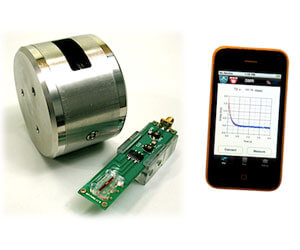
A scientific instrument featured on CSI and CSI: Miami for instant fingerprint analysis is forging another life in real-world medicine, helping during brain surgery and ensuring that cancer patients get effective doses of chemotherapy.
The instrument, called a "desorption electrospray ionization" mass spectrometer, or DESI, is about the size of a shoebox. Students have  carried it into a grocery store and held it close to fruits and vegetables to detect pesticides and microorganisms. 
It has also been used to identify biomarkers for prostate cancer and to detect melamine, a potentially toxic substance that showed up in infant formulas in China in 2008. In addition, DESI can detect explosives on luggage.
Now scientists want to  test the instrument in the operating room during brain cancer surgery, comparing it with traditional analysis of tissue samples by pathologists.
DESI can analyze tissue samples and help determine the type of brain cancer, the stage and the concentration of tumor cells. It also can help surgeons identify the margins of the tumor to assure that they remove as much of the tumor as possible.
 Innovations in medicine like this are happening all the time, and we are hardly aware of them.

Wednesday, August 8, 2012

Miracles and wonders: swallow this, touch that

Take two and call me in the morning.
I don't think we fully appreciate that we're in the midst of a revolution in medicine.

According to the mortality tables, there’s a two-thirds chance that a male who’s age 55 today will live to age 80. If you  plan on being among those who die before age 80, but don’t. Some saying that you should plan on living to age 105, or at least 30 years in retirement. One expert: a 65-year-old husband with a 60-year-old wife would require a 40-year planning horizon to be 90% confident of covering the last to die.

The US Food and Drug Administration has approved a grain-sized ingestible digital sensor that can be swallowed in a pill to track health data from inside the body. The idea is that the data can be used not only by patients themselves, but also by caregivers and doctors to individualize their care. The signal that it sends from the stomach travels through the patient's body to a patch worn on the skin. The patch contains technology that senses the signal and records the exact time the ingestible sensor was swallowed.

University of Florida researchers have moved a step closer to treating diseases on a cellular level by creating a tiny particle that can be programmed to shut down the genetic production line that cranks out disease-related proteins. By combining a protein enzyme and a DNA molecule on gold nanoparticles to mimic the gene regulatory mechanism called RNA interference, a “nanozyme” was able to destroy hepatitis C virus in human liver cells and in the livers of mice.

It is clear that all kinds of products and services  would be available online if we had the bandwidth. Programs that involve massive transfers of data or frequent two-way video communications would be two obvious examples. What’s interesting is how many of these new products and services involve healthcare: Jeff Pfaff of Overland Park, Kan., says he hopes to use the service to “push the limits” of a health-monitoring system he’s building. It would enable at-home patients to teleconference with doctors and family members via a camera hooked up to a TV set and a remote control.

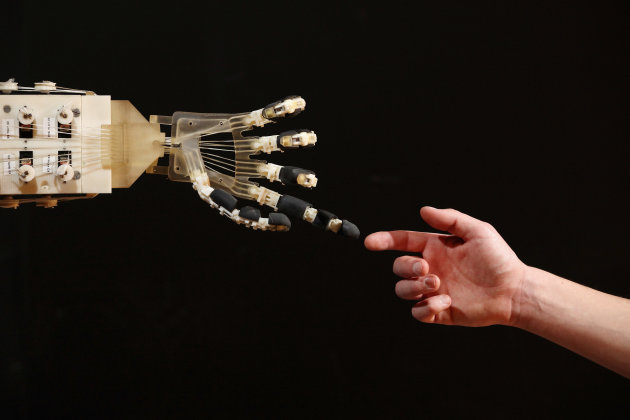
European researchers say they have developed the world's first real-sized, five-fingered robotic hand able to grasp and manipulate objects with human-like dexterity. The team  built a hand using strings that are twisted by small, high-speed motors in five fingers, each with three segments. The device was able to handle a delicate Easter egg and lift a five kilogram load. Light sensors were attached to the hand, making it possible to calculate the force required for the fingers to grasp an object without squashing it or losing its grip.

Wednesday, August 1, 2012

Miracles and wonders: a new hand, zapping cancer

Tickling the ivories, digitally.

The real news in healthcare is coming out of the laboratories, not bureaucracies in Washington.

A research team from Georgia Tech has been working on a rehab glove that is already showing effectiveness for people with limited hand motor skills and proprioception due to spinal injury. The electronic Mobile Music Touch (MMT) glove works with a piano and vibrates individual fingers to point to which keys should be pressed. Using the MMT, people in the study practiced playing the piano for thirty minutes three times a week, and followed up with the glove but without the piano (air piano?), and saw considerable improvement at a time when traditional therapy is usually no longer effective.

Damaged and aged heart tissue of older heart failure patients was rejuvenated by stem cells modified by scientists. "Since patients with heart failure are normally elderly, their cardiac stem cells aren't very healthy," said Sadia Mohsin, Ph.D., one of the study authors and a post-doctoral research scholar at San Diego State University's Heart Institute in San Diego, Cal. "We modified these biopsied stem cells and made them healthier. It is like turning back the clock so these cells can thrive again."

Devising effective drugs is only half the battle faced by pharmaceutical companies. The other half is delivering them to the place in the body they are needed. Some researchers, therefore, are exploring an alternative: building tiny factories that make and release a drug precisely where it is needed. Among these investigators is Daniel Anderson, a chemical engineer at the Massachusetts Institute of Technology. And as he reports in Nano Letters, he and his colleagues have built a device which might do just that. Dr Anderson’s drugmaking machine is a simplified, artificial version of a living cell.

A new method of mapping people's DNA promises to make the procedure more accessible to patients and to help doctors zero in on gene mutations that may cause disease, according to a report Wednesday in the journal Nature. The latest advance in whole-genome sequencing requires only a small amount of DNA to produce a more complete picture of someone's genome, and to immediately determine whether a faulty gene is inherited from the mother, the father or both. That finding could be critical to interpreting results.

In a significant step forward for the development of a potential new cancer treatment, scientists have found how a common cold virus can kill tumors and trigger an immune response, like a vaccine, when injected into the blood stream. Researchers said that by hitching a ride on blood cells, the virus was protected from antibodies in the blood stream that might otherwise neutralize its cancer-fighting abilities. The findings suggest viral therapies like this, called reovirus, could be injected into the blood stream at routine outpatient appointments -- like standard chemotherapy -- making them potentially suitable for treating a range of cancers.

Wednesday, July 25, 2012

Miracles and wonders: fake jellyfish, perfect teeth


Ersatz jellyfish.
Teenagers today will see extraordinary things in their lifetimes.

Researchers have designed a bioengineered jellyfish that can swim, an early step in scientists' quest for a way to make fresh tissue for patients with damaged hearts. The lab-made jellyfish is created with a mix of silicone and rat-heart cells. Although it isn't a living organism, the robot's muscular structure closely resembles that of a real jellyfish, enabling it to swim freely through water. Scientists hope that such techniques will make it possible to harvest cells from one organism and then reorganize them in sophisticated ways to make a bioengineered system for human use, such as a heart pacemaker that wouldn't require battery power.

Thanks to tiny microneedles, eye doctors may soon have a better way to treat diseases such as macular degeneration that affect tissues in the back of the eye. That could be important as the population ages and develops more eye-related illnesses – and as pharmaceutical companies develop new drugs that otherwise could only be administered by injecting into the eye with a hypodermic needle.

A nationwide team of scientists successfully used stem cells to further the goal of creating personalized medical treatments for Parkinson's disease. Because scientists were able to isolate the disease outside the body with the help of stem cells, they could control for certain variables which allowed them to test treatments in a more systematic way. "This study points the way to screening patients with Parkinson’s for their particular variation of the disease, and then treating them with drugs shown effective to work on that variation, rather than trying to treat all patients with the same drugs, as is generally done now." 

Johns Hopkins tissue engineers have used tiny, artificial fiber scaffolds thousands of times smaller than a human hair to help coax stem cells into developing into cartilage, the shock-absorbing lining of elbows and knees that often wears thin from injury or age. Investigators produced an important component of cartilage in both laboratory and animal models. While the findings are still years away from use in people, the researchers say the results hold promise for devising new techniques to help the millions who endure joint pain.

Happy, happy, happy.
A new chemical could make human teeth 'cavity proof' -- and do away with the need for visits to the dentists forever. The molecule has been called 'Keep 32' - after the 32 teeth in a human mouth. The chemical wipes out all the bacteria that cause cavities in just 60 seconds in tests. The chemical could be added to any current dental care product, turning toothpaste, mouthwash and chewing gum into 'super cleansers' that could get rid of the underlying cause of tooth decay.

Friday, June 29, 2012

The real answer to our health care woes


Yesterday, as the Supreme Court was declaring that Obamacare is a tax, some researchers in Canada were announcing a step toward a cure for diabetes.
University of British Columbia scientists, in collaboration with an industry partner, have successfully reversed diabetes in mice using stem cells, paving the way for a breakthrough treatment.
After the stem cell transplant, the diabetic mice were weaned off insulin, a procedure designed to mimic human clinical conditions. Three to four months later, the mice were able to maintain healthy blood sugar levels even when being fed large quantities of sugar. Transplanted cells removed from the mice after several months had all the markings of normal insulin-producing pancreatic cells.
According to the American Diabetes Association, 25.8 million children and adults in the United States—8.3% of the population—have diabetes. Another 79 million people have prediabetes. The total cost of diabetes in 2007 was $218 billion.

You won't improve your health care by funneling your taxes through bureaus and agencies in Washington, which will take their share and make decisions on how or if to send it back to your doctor's office.

The current tsunami of medical discoveries will make Obamacare obsolete before it's fully implemented.

Oh, yesterday we also learned that:
  • Johns Hopkins researchers have generated stem cells from skin cells from a person with a severe, early-onset form of Huntington's disease (HD), and turned them into neurons that degenerate just like those affected by the fatal inherited disorder. By creating "HD in a dish," the researchers say they have taken a major step forward in efforts to better understand what disables and kills the cells in people with HD, and to test the effects of potential drug therapies on cells that are otherwise locked deep in the brain.
  • Vertex Pharmaceuticals announced positive final results from a Phase 2 combination study of Kalydeco™ and a potential cystic fibrosis drug called VX-809. Cystic fibrosis patients with two copies of the most common mutation, Delta F508, showed significant improvements in lung function while taking the combination therapy.

Wednesday, June 13, 2012

Miracles and wonders: escalation in war on cancer

Breakthroughs in the world of medicine.

New research shows a sharp escalation in the weapons race against cancer, with several high-tech approaches long dreamed of but not possible or successful until now. At a conference of more than 30,000 cancer specialists, scientists reported:
  • New “smart” drugs that deliver powerful poisons directly to cancer cells while leaving healthy ones alone.
  • A new tool that helps the immune system attack a broad range of cancer types.
  • Treatments aimed at new genes and cancer pathways, plus better tests to predict which patients will benefit from them.
“I see major advances being made in big diseases” such as breast and prostate cancers, said Dr. Richard Pazdur, cancer drug chief at the federal Food and Drug Administration.

A laboratory test used to detect disease and perform biological research could be made more than 3 million times more sensitive, according to researchers who combined standard biological tools with a breakthrough in nanotechnology. The increased performance could greatly improve the early detection of cancer, Alzheimer's disease and other disorders by allowing doctors to detect far lower concentrations of telltale markers than was previously practical.

Scientists have for the first time transformed skin cells—with a single genetic factor—into cells that develop on their own into an interconnected, functional network of brain cells. The research offers new hope in the fight against many neurological conditions because scientists expect that such a transformation—or reprogramming—of cells may lead to better models for testing drugs for devastating neurodegenerative conditions such as Alzheimer's disease.

Scientists have developed a new approach to visualize how proteins assemble, which may also significantly aid our understanding of diseases such as Alzheimer's and Parkinson's, which are caused by errors in assembly. Understanding how a protein goes from being one thing to becoming another is the first step towards understanding and designing protein nanomachines for biotechnologies such as medical and environmental diagnostic sensors, drug synthesis of delivery.

One of the grimmest legacies of the war in the Pacific is still being fought 70 years on, but a victory over dengue, the intensely painful "breakbone fever" which that conflict helped spread around the world, may be in sight. The U.S. Army, which like its Japanese enemy lost thousands of men to the mosquito-borne disease in the 1940s, has piled resources into defeating the tropical killer. But it may be about to see the battle to develop the first vaccine won not in the United States but by French drug company Sanofi. The Paris-based firm hopes for positive results in September from a key trial among children in Thailand that would set it on course to market a shot in 2015 which would prevent an estimated 100 million cases of dengue infection each year. Of 20,000 annual deaths, many are of children.

Wednesday, May 23, 2012

Miracles and wonders: think to drink coffee


"While American companies operate in radically different ways than they did 40 years ago, the sheltered, government-dominated sectors of the economy — especially education, health care and the welfare state — operate in astonishingly similar ways," David Brooks writes in The New York Times.

That is the most worrisome thing about Obamacare. In corporate America, command-and-control is dead, having given way to "edge of network," hierarchies are flattening, and knowledge is being sucked in from everywhere, including outside of the company. Companies post technical problems on special websites and researchers around the world bid to solve them.

Against this, we have Washington doing its best to consolidate power and decision-making in its bureaucratic hallways. Paradoxically, this is an era of miracles and wonders -- every day brings some new astounding breakthrough in medicine. These usually mean some more effective and more efficient way to cure something -- which means cheaper.

For example:

Researchers have long tried to get the optic nerve to regenerate when injured, with some success, but no one has been able to demonstrate recovery of vision. A team at Boston Children’s Hospital reports a three-pronged intervention that not only got optic nerve fibers to grow the full length of the visual pathway (from retina to the visual areas of the brain), but also restored some basic elements of vision in live mice.

Tiny, wearable gadgets that monitor and record the data of the body’s weight, heart rate, activity levels and other vital signs can change the game in health care. Sonny Vu, co-founder of the medical-device company AgaMatrix, has already developed the first FDA-approved mobile attachment for Apple’s iPhone that acts as a sensor in detecting glucose levels. Vu believes this is one of the many devices that our bodies will harness to keep us up-to-date on what is going on with our health. Mobile devices are popular and will continue to gain popularity, so it makes sense to integrate it with the healthcare system. People can text, check Facebook and ensure that they have normal blood pressure because everything is readily available like the shirt on their back.

An ultrasensitive biosensor that could allow for early detection of cancer and for personalized medicine tailored to the specific biochemistry of individual patients has been developed by Purdue University researchers. The biosensor combines a mechanical sensor, which identifies a biomolecule based on its mass or size, with an electrical sensor that identifies molecules based on their electrical charge. The sensor makes it possible to detect small quantities of DNA fragments and proteins deformed by cancer long before the disease is visible through imaging or other methods.

A woman who lost the use of her limbs after a devastating stroke nearly 15 years ago has taken a sip of coffee by guiding a robotic arm with her thoughts. The 58-year-old used a brain implant to control the robot and bring a flask of the coffee to her lips, the first time she had picked up anything since she was paralysed and left unable to speak by a catastrophic brain stem stroke. Doctors hailed the feat as the first demonstration of an implant that directly controls a reaching and gripping robotic arm by sensing and decoding the patient's brain signals. Watch it here:

Wednesday, May 9, 2012

Miracles and wonders: video games, seeing again


Brain cells.

Here is the real future in our health care:

The tantalising prospect of treating a range of brain diseases, such as Alzheimer's and Parkinson's, all with the same drug, has been raised by UK researchers. They prevented brain cells dying in mice with prion disease. It is hoped the same method for preventing brain cell death could apply in other diseases. Many neuro-degenerative diseases result in the build-up of proteins which are not put together correctly - known as misfolded proteins. This happens in Alzheimer's, Parkinson's and Huntington's as well as in prion diseases, such as the human form of mad cow disease.

A video game developed at UCLA allows non-professional volunteers to accurately diagnose the presence of malaria in patients' red blood cells, aiding medical professionals in this time consuming process. Players are presented with a six-by-eight grid of neutral and infected cells representing a patient's biopsy, the object of the game being to neutralize the infected cells while preserving all the remaining healthy ones. Having gamers diagnose malaria not only saves time but researchers behind the new game say it improves the accuracy of results in the developing world where diagnosis tools are not always in plentiful supply.

Nanotechnology, which allows anti-cancer drugs to target specific tumor cells, has shown early success in human trials. In tests conducted by Bind Biosciences in Cambridge, MA, "multiple lung metastases shrank or even disappeared after one patient received only two-hour-long intravenous infusions of an experimental cancer drug. Another patient saw her cervical tumor reduce by nearly 60 percent after six months of treatment." The technology works by packing drugs inside nano-sized spherical structures which are made of polymers to protect the drug and shield it from the body's immune system.

Two previously blind British men have regained some vision after being fitted with a retinal implant developed by two opticians at the Oxford Eye Hospital and King's College Hospital in London. The two men suffered from a previously inoperable condition in which photoreceptor cells at the back of the eye gradually cease to function. The opticians developed a "wafer-thin, 3mm square microchip with 1,500 light-sensitive pixels that take over the function of the failed photoreceptor rods and cones." When light enters the eye, the chip sends a signal to the optic nerve and from there to the brain. "The end result is the perception of light."

Three studies published this week show that introducing new cells into mice can replace diseased cells — whether hair, eye or heart — and help to restore the normal function of those cells. These proof-of-principle studies now have researchers setting their sights on clinical trials to see if the procedures could work in humans. “You can grow cells in a Petri dish, but that’s not regenerative medicine,” says Robin Ali, a geneticist at University College London, who led the eye study. “You have to think about the biology of repair in a living system.”

Wednesday, April 4, 2012

Miracles and wonders: a healing "lamprey"


Swimming in your body?

Here is a glimpse into the future of medicine.

Tiny microelectromechanical machines running through our bodies are the pursuit of nano labs across the globe, but a team of researchers wants something more: a tiny biomimicking robot that functions like a living creature loaded with sensors derived from animal cells. Called “Cyberplasm,” this robot would mash up biomimicking robotic components with actual mammalian cells to create robot systems and sensors that respond to stimuli like chemicals and light the way living organisms do. “Eye” and “nose” sensors would be derived from animal cells, while an artificial electronic nervous system will record data from Cyberplasm’s surroundings and respond to external stimuli via artificial muscles that are powered by glucose.The whole Cyberplasm system would be modeled on the sea lamprey, an Atlantic-dwelling creature with a simple nervous system that should be relatively easy to mimic. Using the lamprey as a model, the researchers hope to produce a one-centimeter-long prototype capable of swimming around and sensing on its own.

Researchers have designed a new treatment approach that appears to halt the spread of cancer cells into normal brain tissue in animal models. The researchers treated animals possessing an invasive tumor with a vesicle carrying a molecule called imipramine blue, followed by conventional doxorubicin chemotherapy. The tumors ceased their invasion of healthy tissue and the animals survived longer than animals treated with chemotherapy alone.

A vaccine delivered in an injection or nasal spray to prevent heart attacks could be available within five years. Scientists have discovered that the drug stimulates the body's immune system to produce antibodies which prevent heart disease by stopping fat building up in the arteries. The vaccine can cut the build up of fat in arteries by up to 70 per cent.

Researchers have found a "universal" vaccine that could for the first time allow for the effective, wide-scale prevention of flu by limiting the influenza virus's ability to spread and mutate. Universal, or cross-protective, vaccines — so named for their effectiveness against several flu strains — are being developed in various labs worldwide and some are already in clinical trials. The new vaccines would make a bout with influenza less severe, making it more difficult for the virus to spread. At the same time, the vaccines would target relatively unchanging parts of the virus and hamper the virus's notorious ability to evolve and evade immunity.

Monday, March 12, 2012

Miracles and wonders: printing muscle


Printing human muscle.

The real news in health care is the extraordinary advances being made daily. A sampling:

In a small clean room tucked into the back of San Diego–based startup Organovo, Chirag Khatiwala is building a thin layer of human skeletal muscle. He inserts a cartridge of specially prepared muscle cells into a 3-D printer, which then deposits them in uniform, closely spaced lines in a petri dish. This arrangement allows the cells to grow and interact until they form working muscle tissue that is nearly indistinguishable from something removed from a human subject.

It is estimated between 130 - 170 million people worldwide are infected with the hepatitis C, can lead to scarring of the liver and cirrhosis. Although treatment with medication is available, it isn't effective in all cases and between 20 to 30 percent of those infected with hepatitis C develop some form of liver disease. Now a team at the University of Alberta has developed a vaccine from a single strain that is effective against all known strains of the disease.

Starting this spring, for about $5,000, any oncologist will be able to ship a sliver of tumor in a bar-coded package to Foundation's Medicine's lab. Foundation will extract the DNA, sequence scores of cancer genes, and prepare a report to steer doctors and patients toward drugs, most still in early testing, that are known to target the cellular defects caused by the DNA errors the analysis turns up. About 70 percent of cases studied to date have yielded information that a doctor could act on—whether by prescribing a particular drug, stopping treatment with another, or enrolling the patient in a clinical trial.

Medical scientists at Stanford have created a tiny computer chip capable of navigating the body's blood vessels while monitoring patient health and delivering drugs. While the device holds medical promise, it was a breakthrough in mathematics that allowed researchers to overcome previous barriers to powering the chip. Traditional batteries take up too much space, not to mention the problem of corrosion. By recalculating old equations and accounting for the body as an electricity insulator, magnetism became a suitable power source.

Tuesday, January 24, 2012

In the future we won't get fat


At the same that we're turning our health care over to bureaucrats in Washington, our scientists are offering a glimpse of the future of medicine. The future is not anything we know now in our so-called "healthcare system," which was not designed as a system and doesn't work as a system. And it's certainly not anything like what Mr. Obama imagines.

In their book Transcend, Ray Kurzweil and Terry Grossman, MD, write:

"We have exactly doubled the amount of the genetic data collected each year since 1990, and this pace has continued since the completion of the Human Genome Project in 2003. The cost of sequencing a base pair of DNA - the building blocks of our genes - has dropped by half each year from $10 per base pair in 1990 to a small fraction of a penny today. Deciphering the first human genome cost a billion dollars. Today, anyone can have it done for $350,000. But, in case that's still out of your budget, just be patient for a little while longer. We are now only a few years away from a $1,000 human genome. Almost every other aspect of our ability to understand biology in information terms is similarly doubling every year.
  
"Our genes are essentially little software programs, and they evolved when conditions were very different than they are today. Take, for example, the fat insulin receptor gene, which essentially says 'hold on to every calorie because the next hunting season may not work out so well.' That gene made a lot of sense tens of thousands of years ago, at a time when food was almost always in short supply and there were no refrigerators. In those days, famines were common and starvation was a real possibility, so it was a good idea to store as many as possible of the calories you could find in your body's fat cells.

"Today, the fat insulin receptor gene underlies an epidemic of weight prob­lems, with two of three American adults now overweight and one in three obese. What would happen if we suddenly turned off this gene in the fat cells? Scientists actually performed this experiment on mice at the Joslin Diabetes Center. The animals whose fat insulin receptor gene was turned off ate as much as they wanted yet remained slim. And it wasn't an unhealthy slimness. They didn't get diabetes or heart disease, and they lived and remained healthy about 20 percent longer than the control mice, which still had their fat insulin receptor gene working. The experimental mice experienced the health benefits of caloric restriction - the only laboratory-proven method of life extension - while doing just the opposite and eating as much as they wanted. Several pharmaceutical companies are now rushing to bring these concepts to the human market."  

Wednesday, August 24, 2011

Miracles and wonders: new ears, new hearts


Vincent, call your office.

Yes, there's good news out there: breakthroughs in the world of medicine:

People in need of surgery to repair or reconstruct damaged cartilage could soon find help in an unlikely place -- their ears. Stem cells from human ears have successfully been grown into chunks of cartilage that could replace the synthetic materials currently used in surgery.

Stem cell researchers are trying to grow spare parts for the human heart that may be ready for tests on people within five years. Scientists have already made basic heart muscle from stem cells, but the team wants to refine it so it can replace any part damaged in heart attacks, and to recreate the natural pacemaker, where the heartbeat originates.

In a bit of high-tech recycling, researchers have developed an innovative way to identify already-approved drugs that may work against diseases they weren't designed to combat. The scientists have also demonstrated how a couple of such repurposed drugs may have benefits in treating two conditions, inflammatory bowel disease and lung cancer. The researchers found that topiramate, a drug used in epilepsy, might work on inflammatory bowel disease, including Crohn's disease and ulcerative colitis. Another hit suggested that cimetidine, an ulcer drug, might be effective in lung cancer. They then tested the two generic drugs in small studies using animal models of the diseases. In the bowel-disease study, the drug reduced symptoms, and in the lung-cancer paper, the drug was found to slow tumor growth.

Researchers have found a protein normally involved in blood pressure regulation in a surprising place: tucked within the little "power plants" of cells, the mitochondria. The quantity of this protein appears to decrease with age, but treating older mice with the blood pressure medication losartan can increase protein numbers to youthful levels, decreasing both blood pressure and cellular energy usage. The researchers say these findings may lead to new treatments for mitochondrial–specific, age-related diseases, such as diabetes, hearing loss, frailty and Parkinson's disease.

A biomedical engineer has developed a lab-on-a-chip that can perform complex laboratory assays, and do so with such simplicity that these tests can be carried out in the most remote regions of the world. It requires only a tiny finger prick of blood, effective even for a newborn, and gives results in less than 15 minutes. This technology significantly reduces the time between testing and treating. New low-cost diagnostics like the mChip could revolutionize medical care around the world.

Sunday, July 3, 2011

Miracles and wonders: brain in a dish

Microelectrodes measure stem cells

Here's the real story in healthcare -- the amazing discoveries coming every day.

Researchers at the University of Florida have found a way to reanimate brain cells that have been quieted by strokes and traumatic head injuries. "The brain in the dish, or as the scientists prefer to call it, the 'biologically relevant neural model,' is a computer chip with an array of 60 microelectrodes that measure the action potential of neurons grown on top. The microelectrode array, or M.E.A., records the brain cell signals so the scientists can analyze them." After simulating a stroke, which quiets the neurons on the chip, adult stem cells are added, after which the neurons regain strength.

Scientists are at last almost ready to unveil a new drug-delivery system that uses the membranes of red blood cells. It's biocompatible, it's efficient, and evolution has already conducted extensive trials. Researchers at the University of California at San Diego say this system is better than other nanoparticle drug-delivery devices because there is no need for a synthetic membrane. There is no better way to trick the body into believing the device belongs there if it is coated in a natural membrane.
Parallel developments in research may bring sufferers of Type 1 and Type 2 diabetes very near a cure. A team of physicians at Massachusetts General Hospital have found a tuberculosis vaccine, called BCG, prevents T cells from destroying insulin-secreting cells, allowing the pancreas to regenerate and begin producing insulin again, curing the disease. Meanwhile, researchers in the U.K. have pioneered an extremely low-calorie diet of just 600 calories a day. In addition to lowering body fat, insulin levels returned to normal. Out of the eleven participants on the diet, seven were diabetes-free just three months later.

The Mermaid
Japanese researchers have developed the world’s first self-propelled endoscopy device, a remote controlled tadpole-like camera that can “swim” through the digestive tack gathering imagery along the way. This kind of endoscopy isn’t wholly new, of course, but previous iterations of ingestible cameras relied on natural muscle contractions to move them through the body. The “Mermaid,” as it is known, simplifies the process by moving quickly through the digestive tract to its destination, whatever that point may be. To speed the process, it can be inserted into the digestive system at either end, entering the body orally or--well, you know. The device is just 0.4 inches in diameter and just shy of two inches long, and uses magnetic machinery to control its movement and location. Doctors pilot the endoscope with a joystick, watching its progress on a monitor. All said, it takes only a few hours to traverse the whole system from esophagus to colon. It could help ease the strain on patients and detect hard-to-see cancers earlier than was previously possible.

Thursday, March 17, 2011

Miracles and wonders: cancer-smart phones, tic-tac size pacemakers

Cancer detection system.

Everyday something amazing comes out of the medical labs and research centers.

Scientists at the Massachusetts General Hospital that have integrated a microNMR device that accurately detects cancer cells to a smartphone. Though just a prototype, this device enables a clinician to extract small amounts of cells from a mass inside of a patient, analyze the sample on the spot, acquire the results in an hour, and pass the results to other clinicians and into medical records rapidly. How much does the device cost to make? $200.

Researchers at Wake Forest Baptist Medical Center have become the first in the world to use patients’ own cells to build tailor-made urinary tubes and successfully replace damaged tissue. They replaced damaged segments of urinary tubes (urethras) in five boys. Tests to measure urine flow and tube diameter showed that the engineered tissue remained functional throughout the six-year follow-up period.

Medtronic, the world's largest medical-device maker, is using microelectronics and chip manufacturing to shrink pacemakers — implanted devices that regulate the heart's rhythm. Whereas current pacemakers are about as big as a silver dollar, Medtronic's device would be smaller than a tic tac. At that size, the device would be small enough to be inserted via catheter, rather than invasive surgery.

Scientists from the Russian city of Chelyabinsk have developed “a bio-artificial liver” which not only cleans the blood, but is also capable of “jumpstarting” a sick body. Several successful operations have already been conducted at a local hospital.

A joint team of Indian and Australian scientists claims to have achieved a breakthrough by creating an antibody which could be used for developing a "medical smart bomb" that would help seek out and eradicate the root of cancer — the stem cells. 

The promising results of a gene-therapy trial have offered new hope to people with Parkinson's disease. The controversial approach uses virus particles to infuse new genes into a patient's own cells. The goal of the therapy is to provide patients' cells with the blueprints to make proteins that have a therapeutic effect. In this case, the blueprint encoded an enzyme called GAD that would act like a chemical form of deep-brain stimulation, avoiding the need for electrodes, wires and battery packs.