Showing posts with label on the horizon. Show all posts

Friday, February 4, 2011

Miracles and wonders: breakthroughs in medical research

The real story in health care is not what's happening in Washington but what's happening in research. Witness:

The skin gun is not science fiction—it's a prototype medical device that literally sprays skin cells onto burn victims to re-grow skin. Old methods like skin grafts took weeks to heal; the skin gun needs about an hour. Though it is still technically in an experimental stage, the skin gun has already successfully treated over a dozen burn victims. The way it works is by using stem cells from the patient's healthy skin and mixing it with a solution to come up with the spray paint. And combined with that fancy gun, the rest is easy.

Scientists have converted adult skin cells directly into beating heart cells efficiently without having to first go through the laborious process of generating embryonic-like stem cells. The powerful general technology platform could lead to new treatments for a range of diseases and injuries involving cell loss or damage, such as heart disease, Parkinson's, and Alzheimer's disease.

Scientists are bringing probioticsl therapy into the 21st century by genetically engineering the microbes to enhance their effect on the immune system. They hope the new bugs will ultimately help treat inflammatory bowel diseases such as Crohn's disease and ulcerative colitis, as well as other disorders that result from an overactive immune system.

Paper strips containing dots that turn blue when exposed to blood.
Researchers have invented a technique that uses inexpensive paper to make "microfluidic" devices for rapid medical diagnostics and chemical analysis. This new approach offers the potential to extend the inexpensive paper-based systems so that they are able to do more complicated multiple analyses on the same piece of paper. It's a generic platform that can be used for a variety of applications.

A San Diego company has developed a treatment that aims to prevent much of that muscle damage from a heart attack before it starts. The treatment works by injecting a concentrated slurry of stem cells and other regenerative cells isolated from the patient's body directly into the heart's main artery within 24 hours after an attack. "You can't do anything about dead tissue, but tissue that's bruised and damaged—that's revitalizable. If you can get new blood flow in there, that tissue comes back to life," says the company's CEO.

A blood test so sensitive that it can spot a single cancer cell lurking among a billion healthy ones is moving one step closer to being available at your doctor's office. This is like a "liquid biopsy" that avoids painful tissue sampling and may give a better way to monitor patients than periodic imaging scans.

Saturday, January 8, 2011

Miracles and wonders

A new chip to sequence DNA.
Every day brings some fascinating new discovery in medicine:

Bifocal and progressive lenses suck. They're old tech. Like, Benjamin Franklin old. PixelOptics take a more 21st century approach—liquid crystal lenses that adjust their focus in a fraction of a second, for differing focuses when you need them. All that's required to shift the glasses—which can be fitted into any design of frame—is a tap to their touch-sensitive side. A simple electrical impulse changes the liquid crystal, instantly—enabling or disabling a shapeshifting reading zone in the lenses. Or, for an I-can't-believe-I'm-this-impressed-by-glasses moment, slide your finger along the side of the specs to active a tiny gyroscope that'll adjust the focus as you move your head.

Ion Torrent, which last month began selling a sequencer it calls the Personal Genome Machine. While most sequencers cost hundreds of thousands of dollars and are at least the size of small refrigerators, this machine sells for just under $50,000 and is the size of a largish desktop printer.  While not intended for the general public, the machine could expand the use of DNA sequencing from specialized centers to smaller university and industrial labs, and into hospitals and doctors’ offices, helping make DNA sequencing a standard part of medical practice.

Scientists from Imperial College London are developing technology that could ultimately sequence a person's genome in mere minutes, at a fraction of the cost of current commercial techniques. The research suggests that scientists could eventually sequence an entire genome in a single lab procedure, whereas at present it can only be sequenced after being broken into pieces in a highly complex and time-consuming process.

A team of scientists led by Melissa Rolls, an assistant professor of biochemistry and molecular biology at Penn State University, has peered inside neurons to discover an unexpected process that is required for regeneration after severe neuron injury. "We hope that by showing how microtubules -- a key part of neuron infrastructure -- are built in healthy neurons and rebuilt in response to injury, our study might provide insights for future researchers who are developing drug therapies for patients with nerve disease or damage," Rolls said.

New research suggests it may be possible for people with type 1 diabetes to grow their own insulin-producing cells -- an advancement that could lead to a cure for this form of diabetes. Researchers were able to take cells from men’s testicular tissue, isolate stem cells, and turn them into insulin-secreting islet cells. These islet cells were then re-injected into mice with diabetes. And it worked.

Thursday, December 2, 2010

On the horizon: painless vaccination, new organs

The advances in medicine come daily.

A cluster of stem cells is encouraged to turn into blood vessels.
Growing living tissue and organs in the lab would be a life-saving trick. But replicating the complexity of an organ, by growing different types of cells in precisely the right arrangement—muscle held together with connective tissue and threaded with blood vessels, for example—is currently impossible. Researchers at MIT have taken a step toward this goal by coming up with a way to make "building blocks" containing different kinds of tissue that can be put together.

A new process for creating a personalized vaccine may become a crucial tool in helping patients with colorectal cancer develop an immune response against their own tumors. This dendritic cell (DC) vaccine, developed at Dartmouth and described in a research paper published this week in the journal Clinical Cancer Research, was used after surgical resection of metastatic tumors to try to prevent the growth of additional metastases. 

A spray solution of a patient's own stem cells is healing their severe burns. So far, early experiments under a University of Utah pilot project are showing some remarkable results.

A new breakthrough in imaging technology using a combination of light and sound will allow health care providers to see microscopic details inside the body. Access to this level of detail potentially eliminates the need for some invasive biopsies, but it also has the potential to help health care providers make diagnoses earlier than ever before -- even before symptoms arise.

Doctors perform the world's first trachea transplant using stem cells to regenerate tissue. They took tissue from her nose and bone marrow stem cells to create a trachea biologically identical to the original organ.

An array of dissolving microneedles is shown on a fingertip.
Researchers are advancing a technology for the painless, self-administration of flu vaccine using patches containing tiny microneedles that dissolve into the skin.

Thursday, November 18, 2010

On the horizon: nanoshells, microthreads, stem cells

Among the stories you don't get in the general press are the amazing breakthroughs in medicine. Even if you see them individually you don't get the full impact of what it all means. Every day someone somewhere is discovering something that could only have been described as miraculous few years ago. So read it here:

Gold nanoshells
Nanoshells -- hollow silica spheres covered with gold -- continue to surprise researchers with how effective they are. Researchers say they are killing breast cancer cells at a previously unreachable root level. In a mouse study the nanoshells delivered heat to breast cancer tumors already treated with radiation and not only shrank the tumor but also dramatically decreased the population of cancer stem cells.

Researchers have repaired large muscle wounds in mice by growing and implanting "microthreads" coated with human muscle cells. The microthreads—made out of the same material that triggers the formation of blood clots—seem to help the cells grow in the proper orientation, which is vital for rebuilding working muscle tissue.

Scientists have discovered how to make human blood from adult human skin. The discovery could mean that in the foreseeable future people needing blood for surgery, cancer treatment or treatment of other blood conditions like anemia will be able to have blood created from a patch of their own skin to provide transfusions.

Researchers have generated 100 new lines of human induced pluripotent stem cells (iPSC) from individuals with lung diseases, including cystic fibrosis and emphysema. The new stem cell lines could possibly lead to new treatments for these debilitating diseases.

For the first time, human cells have been used to create a lab-grown liver. It's a milestone on the way to creating a new source of livers for transplant.

Corneas made in the lab using genetically engineered human collagen could restore sight to millions of visually impaired people waiting for transplants from human donors. Investigators have reported results from the first 10 people in the world treated with the biosynthetic corneas. Two years after having the corneas implanted, six of the 10 patients had improved vision. Nine of the 10 experienced cell and nerve regeneration, meaning that corneal cells and nerves grew into the implant.

Thursday, October 7, 2010

On the horizon: seeing is believing

The breakthroughs in medicine come daily.

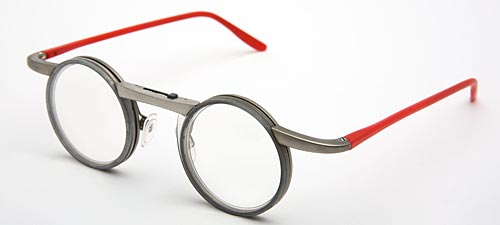
For many people past the age of 40, focusing on close objects restaurant menus, — for instance — just gets harder and harder. Most people with this condition, called presbyopia, eventually give in and get reading glasses, bifocals or glasses with progressive lenses. But what if there were another alternative that didn't require people to carry an extra set of glasses or have only part of their field of vision in focus at any one time? Zoom Focus Eyewear has just such an option: eyeglasses, called TruFocals, that the wearer can manually adjust to give clear, undistorted vision whether reading a book, working on a computer or looking into the distance.

Three scientists have won the Nobel Prize in chemistry for developing a process that, among other things, helps synthesize medicines. One example involves a marine sponge called Discodermia dissoluta. As a defensive mechanism, the sponges produce large and complex chemical molecules that are poisonous and that prevent other organisms from exploiting them. And the substance produced by this particular sponge, discodermolide, seemed to have anti-cancer properties. The process that the Nobel winners helped develop made it possible to artificially produce the substance in large enough quantities to make research practical.

Researchers at the University of Massachusetts Amherst say they can deliver a dormant toxin into a specific site such as a tumor for anti-cancer therapy, then chemically trigger the toxin to "de-cloak" and attack the tumor from within.

Researchers are developing an artificial retina that transforms a camera feed into electric pulses that stimulate the optic nerve, providing rudimentary vision for millions of people with degenerative retinal diseases. The research, involving six national labs, four universities and a commercial partner is developing technologies that will enable third- and fourth-generation models using as many as 1024 electrodes—which could provide enough detail to read 24-point font and recognize faces. 

Errors in the copying of genes during cell division can cause numerous diseases, including cancer. Yale School of Medicine scientists, however, have unraveled the secrets of a much more rare phenomenon with potential therapeutic implications – disease-causing genes that show a high frequency of self-repair. The researchers say that knowing that these particular mutations can revert with high frequency gives them hope that they might find a way to mimic this process to develop treatments for other genetic diseases.

Friday, September 10, 2010

On the horizon: new treatments for wounds, cancer

Breakthroughs in medicine:

A multidisciplinary research group at UCLA has now teamed up to not only visualize a virus but to use the results to adapt the virus so that it can deliver medication instead of disease. The work provides critical structural information for researchers around the world attempting to modify the adenovirus for use in vaccine and gene-therapy treatments for cancer.

A gene therapy in the form of a thick gel is about to revolutionize wound treatment. The gel is called Nexagon, and when you apply it to a wound, it reprograms the cells to heal more quickly and efficiently.

Since last April, 19 cancer patients whose liver tumors hadn’t responded to chemotherapy have taken an experimental drug. Within weeks of the first dose, it appeared to work, by preventing tumors from making proteins they need to survive. The results are preliminary yet encouraging. With a slight redesign, the drug might work for hundreds of diseases, fulfilling the promise that wonder cures like stem cells and gene therapy have failed to deliver.

 Choking a Tumor MRI scans show that blood flow [red] decreases in liver tumors 
after ALN-VSP therapy, which stops cancer cells from making proteins that form blood vessels.

If a drug can be guided to the right place in the body, the treatment is more effective and there are fewer side-effects. Researchers at Lund University in Sweden have now developed magnetic nanoparticles that can be directed to metallic implants such as artificial knee joints, hip joints and stents in the coronary arteries.

Scientists today reported that frog skin contains natural substances that could be the basis for a powerful new genre of antibiotics.

Corneas made in the lab using genetically engineered human collagen could restore sight to millions of visually impaired people waiting for transplants from human donors, researchers say.

Thursday, August 19, 2010

Body shop of the future

Regenerative medicine’s once-wild ideas are fast becoming reality, Smithsonian reports.
Late last year, Organovo, a biotech company in San Diego, began distributing the first commercially available body-part printer. Yes, you read correctly: a printer for body parts. Using the same idea as an ink-jet printer, it jets laser-guided droplets of cells and scaffold material onto a movable platform. With each pass of the printer head, the platform sinks, and the deposited material gradually builds up a 3-D piece of tissue. Regenerative medicine laboratories around the world have relied on the printer to generate pieces of skin, muscle and blood vessels.

Anthony Atala, director of the Wake Forest Institute for Regenerative Medicine, and colleagues use human cells to grow muscles, blood vessels, skin and even a complete urinary bladder. Atala’s lab has used the technology to construct a two-chambered mouse-size heart in about 40 minutes.

They have also managed to fashion lab-built kidneys that produce urine when implanted into experimental animals. And within a few years, he says, human skin could be coaxed into growing in a lab and be given to burn victims and other patients who today must undergo painful skin grafts.

Organs grown outside the body will transform medicine, Atala predicts, but spurring repair and regrowth within the body will be just as important. He and other scientists foresee injecting healthy cells and growth-inducing molecules into diseased or injured lungs, livers and hearts, prompting them to regenerate. Then there’s the ultimate challenge: Could a patient someday regrow an entire limb?
“It is not outside the realm of possibility,” Atala says. “If a salamander can do it, why can’t a human?”

Friday, August 6, 2010

Will we regrow limbs some day?

Animals like newts and zebra fish can regenerate limbs, fins, even part of the heart. A human can renew his liver to some extent, and regrow a fingertip while very young, but not much more. But humans have very little regenerative capacity, probably because of an evolutionary trade-off: suppressing cell growth reduced the risk of cancer, enabling humans to live longer.

Two studies reported in The New York Times suggest that we may be able to have this ability after all.

By inactivating two genes that work to suppress tumors, researchers at Stanford University got mouse muscle cells to revert to a younger state, start dividing and help repair tissue. 

“We have shown we can recapitulate in mammalian cells behavior of lower vertebrate cells that is required for regeneration,” Dr. Jason H. Pomerantz said. “We would propose using it in amputations of a limb or part of a limb or in cardiac muscle.” Interfering with tumor suppressor genes is a dangerous game, but Dr. Pomerantz said the genes could be inhibited for just a short period by applying the right dose of drug. When the drug has dissipated, the antitumor function of the gene would be restored.

In the second study, at the University of California at San Francisco, researchers have developed a way of reprogramming the ordinary tissue cells of a mouse heart into heart muscle cells, the type that is irretrievably lost in a heart attack. To make clinical use of the discovery, they would need to duplicate the process with human cells, and then develop three drugs that could substitute for the three proteins used in the conversion process. The drugs could be loaded into a stent, a small tube used in coronary bypass operations. With the stent inserted into a heart artery, the drugs would convert some of the heart’s tissue cells into heart muscle cells.

Thursday, August 5, 2010

Predicting Alzheimer's before the symptoms appear

Some day we may know years before the mind starts to go that we're at risk for Alzheimer's, much as we know today that cholesterol is a marker for later heart disease.

The National Institute on Aging and the Alzheimer’s Association announced new proposed guidelines in July, The New York Times reports. There was some muttering over this by people who felt it might give the pharmaceutical industry reason to produce drugs people might nor really need -- something the organization's denied.

Today a diagnosis — based on declining memory and reasoning abilities — requires severe symptoms. But researchers agree that Alzheimer’s smolders in the brain a decade or more before memory loss or diminished ability to reason. With new criteria for early diagnosis, the stage is set for testing drugs that might prevent the disease from running its course, investigators say.

Already, some doctors are using biomarkers, like spinal fluid tests that are commercially available, against the advice of researchers. Scientists are still working on standardizing the tests — making sure that, like a test for cholesterol or prostate cancer, an Alzheimer’s biomarker test done in one lab will give the same results as one done elsewhere. The spinal fluid tests can show levels of amyloid and another Alzheimer’s protein, tau. But it is not yet known what levels of amyloid or tau in spinal fluid are abnormal. And measurements of amyloid and tau can vary as much as 30 percent from one research lab to another.
It might be a decade or more before any drugs are found to work and approved for marketing. So there is not much people can do if they go to a private doctor, have a spinal fluid test and are told they might be in the early stages of Alzheimer’s.