Friday, April 8, 2011

Toss those cookbooks

I've been going through the business throwing stuff away. Seems I've saved every telephone I've ever owned. There are three computer printers down there. And more books than the Library of Congress. What to keep?

An article in the New York Times has some advice, including this on books.
Keep them (with one exception). Yes, e-readers are amazing, and yes, they will probably become a more dominant reading platform over time, but consider this about a book: It has a terrific, high-resolution display. It is pretty durable; you could get it a little wet and all would not be lost. It has tremendous battery life. It is often inexpensive enough that, if you misplaced it, you would not be too upset. You can even borrow them free at sites called libraries. 
But there is one area where printed matter is going to give way to digital content: cookbooks. Martha Stewart Makes Cookies a $5 app for the iPad, is the wave of the future. Every recipe has a photo of the dish (something far too expensive for many printed cookbooks). 
Complicated procedures can be explained by an embedded video. When something needs to be timed, there’s a digital timer built right into the recipe. You can e-mail yourself the ingredients list to take to the grocery store. The app does what cookbooks cannot, providing a better version of everything that came before it. 
Now all Martha has to do is make a decorative splashguard for a tablet and you will be all set.

What's up, Doc?

Will live forever.

Middle-aged men and women may be able to lower their blood pressure readings by laughing more and listening to music they enjoy, new research indicates.

Prescribing antibiotics for patients with discoloured phlegm caused by acute cough has little or no effect on alleviating symptoms and recovery, a Cardiff University study has found.

Itching, like yawning, may be contagious, causing people to feel an urge to scratch after they see another person scratching. That’s according to a new study published in the British Journal of Dermatology.

Researchers have found that people living at higher altitudes have a lower chance of dying from ischemic heart disease and tend to live longer than others.

Cocoa, used throughout history as a folk medicine, may actually have significant health benefits, according to a new study by Harvard researchers. Their analysis of 21 studies with 2,575 participants shows that cocoa consumption is associated with decreased blood pressure, improved blood vessel health, and improvement in cholesterol levels, among other benefits.

A lesser known side effect of sleep deprivation is short-term euphoria, which can potentially lead to poor judgment and addictive behavior, according to new research

Regular exercise and a low-sodium diet are two lifestyle changes that are often recommended to lower high blood pressure. Now a new study shows that physical activity appears to help keep blood pressure from climbing after people eat eye-popping amounts of salt -- 18,000 milligrams a day to be exact.

Is this the next exercise fad?

Likes jumping rope and ice cream.

Traditionally the turf of the boxing ring and schoolyard, jumping rope is nearly perfect exercise in terms of conditioning, cost-benefit and convenience, William Hamilton writes in the Wall Street Journal.
"To coordinate that kind of rhythm, the whole body has to be in sync—core, shoulders, legs," said Brian Nguyen, the actor Mark Wahlberg's personal trainer. Mr. Nguyen trained with Mr. Wahlberg for his role in last year's film "The Fighter." "It's a very intense movement for the body," he explained. 
Jumping is also gentler and kinder, though. "You're getting the most bang for your buck, because you're working almost every part of your body, but there's not the impact of running, because of the way the foot lands," said Alexis Colvin, an assistant professor of sports medicine in the Department of Orthopaedic Surgery at Mount Sinai Medical Center in Manhattan.
So then Hamilton gets down to technique.
John Snow, the manager of Trinity Boxing Gym in Lower Manhattan, has basic pointers. He has me jump in place, without a rope, practicing my arm movement: elbows to my sides, turning the wrist and bending and rolling the elbow, breathing through my nose, setting a pace, staying focused and loose. Mr. Snow called it "controlled relaxation," an eloquent attitude towards life, as well as rope jumping.
"An eloquent attitude towards life." I like that. I think Moose Tracks ice cream is an eloquent attitude toward life.

I say, let them eat broccoli

Will do well in corporate meetings.

If you’re not a big fan of bitter food, chemists have just the loophole for you. You still have to take the bitter, but you won’t have to taste it. Scientists have concocted a new and improved “bitter blocker.” 
We likely find bitter bad because many toxic substances are bitter. So an aversion to bitter may have helped our ancestors survive.
Right you are, Sparky -- that's why no one should ever eat beets. Ever. If you do, you will die.
Problem is, plenty of healthful foods are bitter, too. Take broccoli and kale. (Please.) The standard solution, drowning out the bitter with butter, sort of cancels out the veggies’ health food status.

Rather than getting rid of the bitter, chemists came up with a compound that simply blocks our receptors for the bitter molecules, and our ability to taste them. So you may not need that spoonful of sugar to make the medicine go down. Or the broccoli.
However, we all know it's true: spare the spinach, spoil the child. God invented vegetables to give parents a means of disciplining children so that they will be prepared to go forth into the world and join the accounts receivable department at a global conglomerate and be miserable the rest of their awful lives.

Besides, how much bitter can a bitter blocker block if a bitter blocker blocks broccoli? You see what I mean.

I told you there is a god

Eat this, live forever.

Here's some good news: Strawberries have the potential to prevent esophageal cancer, according to a preliminary study.
Freeze-dried strawberries slowed the growth of dysplastic, or precancerous, lesions in about 30 people who consumed the fruit for six months. The freeze-dried substance is about 10 times as concentrated as fresh strawberries, but the study's lead researcher, Tong Chen, an assistant professor in the oncology division of Ohio State University, suggested people could still benefit from eating whole strawberries daily.
Stay with me. Other researchers claim that eating a bar of dark chocolate once a week can lower the risks of cancer, but what is more important: dark chocolate can be used even to inhibit the growth of cancerous cells.

Told you.

Saturday, March 26, 2011

Eat your fiber, boys and girls

Eat rope, live forever.

Dietary fiber may be associated with a reduced risk of death from cardiovascular, infectious and respiratory diseases, as well as a reduced risk of death from any cause, a new study says.

In the study involving 219,123 men and 168,999 women, fiber intake was associated with a significantly decreased risk of total death in both men and women -- the one-fifth of men and women consuming the most fiber (29.4 grams per day for men and 25.8 grams for women) were 22 percent less likely to die than those consuming the least (12.6 grams per day for men and 10.8 grams for women).

The risk of cardiovascular, infectious and respiratory diseases was reduced by 24 percent to 56 percent in men and 34 percent to 59 percent in women with high fiber intakes. Dietary fiber from grains, but not from other sources such as fruits, was associated with reduced risks of total, cardiovascular, cancer and respiratory disease deaths in men and women.

You can see a list of foods with lots of fiber here. Potato skins are included.

Thursday, March 17, 2011

Miracles and wonders: cancer-smart phones, tic-tac size pacemakers

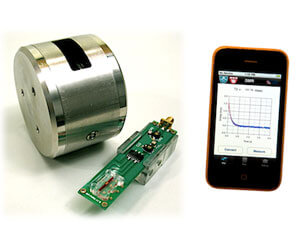
Cancer detection system.

Everyday something amazing comes out of the medical labs and research centers.

Scientists at the Massachusetts General Hospital that have integrated a microNMR device that accurately detects cancer cells to a smartphone. Though just a prototype, this device enables a clinician to extract small amounts of cells from a mass inside of a patient, analyze the sample on the spot, acquire the results in an hour, and pass the results to other clinicians and into medical records rapidly. How much does the device cost to make? $200.

Researchers at Wake Forest Baptist Medical Center have become the first in the world to use patients’ own cells to build tailor-made urinary tubes and successfully replace damaged tissue. They replaced damaged segments of urinary tubes (urethras) in five boys. Tests to measure urine flow and tube diameter showed that the engineered tissue remained functional throughout the six-year follow-up period.

Medtronic, the world's largest medical-device maker, is using microelectronics and chip manufacturing to shrink pacemakers — implanted devices that regulate the heart's rhythm. Whereas current pacemakers are about as big as a silver dollar, Medtronic's device would be smaller than a tic tac. At that size, the device would be small enough to be inserted via catheter, rather than invasive surgery.

Scientists from the Russian city of Chelyabinsk have developed “a bio-artificial liver” which not only cleans the blood, but is also capable of “jumpstarting” a sick body. Several successful operations have already been conducted at a local hospital.

A joint team of Indian and Australian scientists claims to have achieved a breakthrough by creating an antibody which could be used for developing a "medical smart bomb" that would help seek out and eradicate the root of cancer — the stem cells. 

The promising results of a gene-therapy trial have offered new hope to people with Parkinson's disease. The controversial approach uses virus particles to infuse new genes into a patient's own cells. The goal of the therapy is to provide patients' cells with the blueprints to make proteins that have a therapeutic effect. In this case, the blueprint encoded an enzyme called GAD that would act like a chemical form of deep-brain stimulation, avoiding the need for electrodes, wires and battery packs.